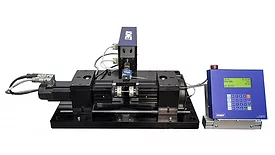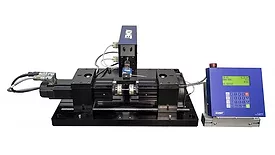
Material fatigue is a critical concern in engineering, with over 90% of failures caused by fatigue stress rather than overloading. As industries push material limits, efficient fatigue testing becomes vital. Rotating beam fatigue testing, dating back to the mid-1800s, provides a cost-effective way for researchers to evaluate material endurance while saving time and money.
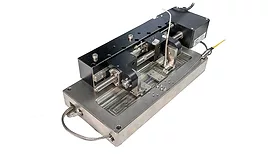
The microtester has revolutionized materials testing by allowing precise evaluations of small specimens, such as biological tissues and semiconductor wafers. This article discusses its key features, benefits, and future potential in materials testing.
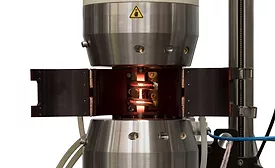
Fatigue testing has made significant progress in recent years, especially in test and environmental conditions. Remote monitoring has advanced with the use of AI-enabled camera systems, making it easier to integrate legacy instruments.
Materials testing ensures quality by subjecting materials and products to controlled conditions to evaluate properties and behavior under stress. Learn how mechanical, physical, and chemical properties are evaluated to determine suitability for different applications.
Fatigue testing is unique in that it repeatedly exposes parts to “real-world” conditions, producing data and results that helps manufacturers predict the part’s durability.
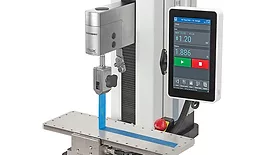
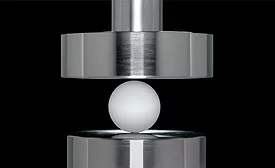
Under controlled conditions and with appropriate test equipment, compression testing provides quality engineers, inspectors, and research professionals with data they need to determine a material or component’s physical characteristics for quality assurance, design suitability, and customer satisfaction.
Fatigue is a failure mechanism caused by repeated cyclic loading that leads to cumulative damage within a material, and ultimately catastrophic failure. “Between 80% to 90% of all mechanical service failures can be attributed to Fatigue,” according to the American Society of Metals – Metals Handbook 1975 & 2008.
As one of the most common mechanical components in the world, roller elements are of critical importance. It is necessary for bearings and raceways to be carefully engineered and manufactured so that the machines which use them are as safe and stable as possible.