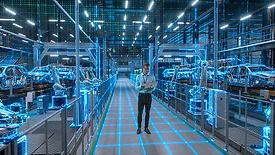
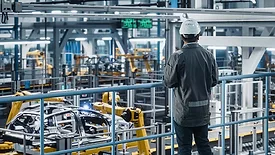
Across manufacturing, aerospace, medical devices, and software-driven production environments, one challenge consistently rises to the top of executive discussions: the widening skills gap in quality engineering.
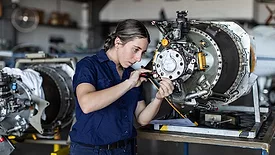
Keri Ginn is an NDT ASNT Level Three as well as a senior quality manager at AAR Government Services. She's an expert in NDT quality management, supplier audits, and business analytics and she's recently written an article for Quality about recruiting the next generation of NDT professionals.
Industry is entering what many describe as the next industrial revolution, an era defined not by a single breakthrough technology, but by the convergence of powerful forces reshaping how products are designed, manufactured, and delivered.
Global supply chains are under sustained strain, characterized by extended lead times, rising costs, and limited flexibility in the event of disruptions.
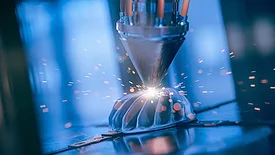
As metal additive manufacturing (AM) matures from prototyping tool to bona fide production technology, the conversation around “quality” has to grow up with it.
You’re already a superstar in quality control, but are you also a bit of a wordsmith? Can you unleash a wicked pun, or do you just like a good laugh? Join our caption contest and show your wit and creativity (try your best not to be vulgar, though)
I felt it might be of interest to continue the discussion from my previous column on organizational culture. It is not easy for some organizations to convert to a culture that is truly focused on establishing a robust culture of quality.
My career started with the early days of the semiconductor industry, and a few years later techies started dreaming of large-scale semiconductor memory.
In laboratories, manufacturing plants, hospitals, testing facilities, and certification bodies around the world, quality systems are quietly losing their soul.
 RSS
RSS