Quality Magazine logo
search
cart
facebook twitter linkedin youtube
  • Sign In
  • Create Account
  • Sign Out
  • My Account
Quality Magazine logo
  • NEWS
  • PRODUCTS
    • FEATURED PRODUCTS
    • SUBMIT YOUR PRODUCT
  • CHANNELS
    • AUTOMATION
    • MANAGEMENT
    • MEASUREMENT
    • NDT
    • QUALITY 101
    • SOFTWARE
    • TEST & INSPECTION
    • VISION & SENSORS
  • MARKETS
    • AEROSPACE
    • AUTOMOTIVE
    • ENERGY
    • GREEN MANUFACTURING
    • MEDICAL
  • MEDIA
    • A WORD ON QUALITY PUZZLE
    • EBOOKS
    • PODCASTS
    • VIDEOS
    • WEBINARS
  • EVENTS
    • EVENT CALENDAR
    • IMTS
  • DIRECTORIES
    • BUYERS GUIDE >
      • Supplier Insights
    • NDT SOURCEBOOK
    • VISION & SENSORS
    • TAKE A TOUR
  • INFOCENTERS
    • Digital Quality Management Systems
    • NEXT GENERATION SPC & QUALITY ANALYTICS
  • AWARDS
    • ROOKIE OF THE YEAR
    • PLANT OF THE YEAR
    • PROFESSIONAL OF THE YEAR
  • MORE
    • Expert Columns
    • NEWSLETTERS
    • QUALITY STORE
    • INDUSTRY LINKS
    • SPONSOR INSIGHTS
  • EMAG
    • eMAGAZINE
    • ARCHIVES
    • CONTACT
    • ADVERTISE
  • SIGN UP!
Vision & Sensors

Vision & Sensors | Machine Vision Systems

Pericentric Lenses Explained

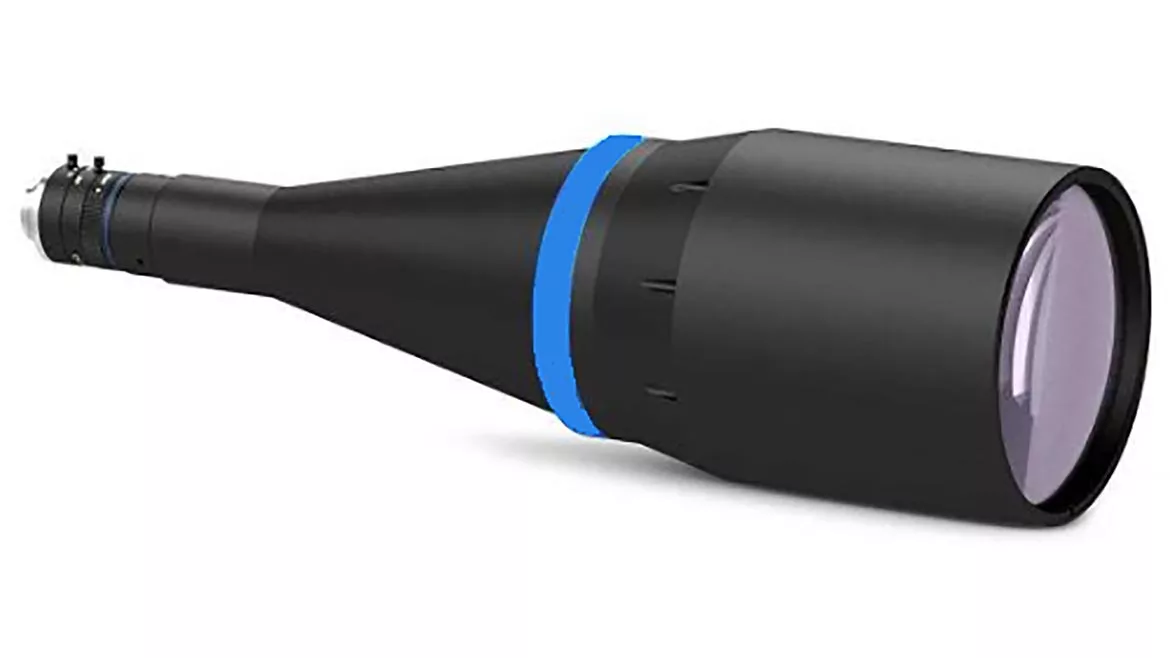
Pericentric lenses image both the top and lateral sides of a round object using a single camera.
By Joe Gugliotti
Edited picture of pericentric lens.

Image Source: R.J. Wilson, Inc. and their specialty lens manufacturer

November 24, 2024
✕
Image in modal.

Sometimes we need to view the top of a cylinder and just enough of the upper sides to image key features, such as the crimp or printing on the upper sides of a medical vial or short shots on the sides of an injection-molded cap. A common method of imaging the top and sides of a small cylinder involves the use of multiple cameras, arrayed with a top-down camera and up to four side-view cameras, typically placed at 90° to each other.

It’s not always possible to configure this imaging solution due to physical space limitations on the sides of the line, as well as having cylindrical containers that may lack the pitch on the conveyor to provide a clear view from each side camera.

What Kind of Image is Provided by a Pericentric Lens?

A pericentric lens provides a view of the top AND a limited vertical section of the lateral sidewalls of a cylindrical object, from the top surface downward. There are often key features that are visible on the sides of a cylindrical object within this limited height range.

The diameter and vertical height of the viewed region are dependent upon the working distance between the bottom of the lens and the top of the cylindrical object. The side view of the pericentric lens is at a maximum 24° from vertical. The following field-of-view ranges are typical of a pericentric lens:

  • The field-of-view at a working distance of 80mm is 20mm diameter X 60mm height.
  • The field-of-view at a working distance of 20mm is 60mm diameter X 20mm height.

The 360° image may be used “as is” for the detection of patterns or features on the side, such as short shots, label presence, printed code presence, and the imaging of other features. The circular 360° image, in many cases, does not have a bearing on the application, as long as the image appears consistent.

Graphic: How Does Pericentric Lens Work
Image Source: R.J. Wilson, Inc. and their specialty lens manufacturer
Graphic: Circular Image Diameter
Image Source: R.J. Wilson, Inc. and their specialty lens manufacturer

The 360° image can also be “unwrapped” using software, such that the image may be used for barcode reading, pattern matching, or other inspection task that requires a minimally-distorted image.

MVSystems Graphic of an unwrapped image, edited
Image Source: R.J. Wilson, Inc. and their specialty lens manufacturer

Image Circle Diameter

Pericentric lenses work in 360° and specific models are compatible with 1/3”, ½”, and 2/3” camera sensors. Because the field-of-view is circular, the image circle size must fully fit within the vertical dimension of the camera sensor used. This is an important consideration when a sensor size other than one of the standard formats is used.  

  • Pericentric lenses for 1/3″ sensors project a 3.6mm image circle
  • Pericentric lenses for 1/2″ sensors project a 4.8mm image circle
  • Pericentric lenses for 2/3″ sensors project a 6.6mm image circle

Note: This is different than having the lens be the same or larger format than the camera sensor size. In this case, the lens projects a fixed size image circle and it must fit within the vertical dimension of the sensor to provide a full 360° image.

What are Some Typical Applications for a Pericentric Lens?

Inspecting for Quality and Printing on Medical Vial Caps

To inspect the medical vial’s cap, we’ll need to image the top and sides of the cap. The pericentric lens is used to 1) image the top of the cap to inspect the rubber stopper and the needle hole, 2) image the crimp region at the base of the cap to look for deformation, and 3) verify the presence of the printing or, depending on the application, image a code printed around the side of the cap.

Cap sealing of vials.
Image Source: R.J. Wilson, Inc. and their specialty lens manufacturer
Bottle threads
Image Source: R.J. Wilson, Inc. and their specialty lens manufacturer

Imaging Short Shots and Defects on Injection-Molded Caps

Short shots on injection-molded plastic components are typically furthest from the “gate” and tend to appear at the edges of the cap’s lid and regions farthest from the gate into the mold. The top-view image of the blue cap below does not provide any information about the sides, where a short-shot or defect may be present. In this example, there’s a hole within the finger notch of the cap that cannot be imaged from a top-only view, but is clearly visible with a pericentric lens.

Lab image: Cap 2 original.
Image Source: R.J. Wilson, Inc. and their specialty lens manufacturer
Lab image: Cap 2
Image Source: R.J. Wilson, Inc. and their specialty lens manufacturer

Imaging Sprockets and Gears

When imaging objects with a height below the maximum viewable height of the pericentric lens configuration, it’s possible to view the entire side height. While still somewhat distorted because of the side view’s angle of view, inspections, such as the sprocket inspection below, can check for debris or an improper geometry within each gear tooth.

Sprockets
Image Source: R.J. Wilson, Inc. and their specialty lens manufacturer
Gears original
Image Source: R.J. Wilson, Inc. and their specialty lens manufacturer

Imaging Pre-Form and Bottle Threads

Imaging the top and threads of a bottle pre-form or a finished container may focus on circularity of the top and the presence of the threads or other features only visible from the angled side view.

Preform Raw
Image Source: R.J. Wilson, Inc. and their specialty lens manufacturer
Bottle threads
Image Source: R.J. Wilson, Inc. and their specialty lens manufacturer

What Kind of Light is Typically Used with a Pericentric Lens?

A pericentric lens creates a 360° image. A diffuse LED ring light is the most flexible means of illumination, in that the light provides better coverage, it is a softer light without visible LEDs reflecting off the object, and the diffuse ring light is less prone to creating random specular reflections off the object’s edges or surface that may inhibit the inspection algorithm.

The diffuse LED ring light may be triggered and strobed for moving object image acquisition. As with any LED lighting application, the wavelength of the light may have an effect on the image contrast within the object.

The diffused ring light may or may not be the correct lighting method, depending on the application requirements, but is a good place to start when experimenting with a pericentric lens. Diffuse LED ring lights are available to fit on the end of the pericentric lens.

Presentation of the Objects

It’s important to present the object upright and in a single file as it is conveyed beneath the center point of the lens. Since the pericentric lens is imaging the lateral sides of the object, be sure there is a space of about one object diameter between objects on the conveyor so there is no blockage of the lateral imaging capability of the pericentric lens.

Conclusion

The pericentric lens’s primary benefit is the ability to provide a top view AND a 360° lateral view of a section of the sides of a cylindrical object. Remember the importance of selecting the appropriate lens format so that the full 360° image circle is contained within the vertical dimension of the camera sensor.

Although the viewing angle of 24° from vertical is not going to provide the same type of image as a straight-on view from the side, a pericentric lens can provide enough of a side-view to meet the requirements of many applications. By obviating the need for dedicated side-view cameras, the cost and complexity of the imaging solution can be reduced.

READ MORE

  • Key Considerations When Selecting a Machine Vision Lens
  • Choosing a Lens for Machine Vision
  • New Sensors and Machine Vision Applications Drive Advances in Optics
KEYWORDS: lenses machine vision manufacturing metrology systems

Share This Story

Looking for a reprint of this article?
From high-res PDFs to custom plaques, order your copy today!

Joe Gugliotti is the president of R.J. Wilson, Inc., a technologist specializing in providing image formation components for machine vision and vision-guided robotics applications. For more information, call (781) 335-5500, email [email protected] or visit www.rjwilson.com.

Recommended Content

JOIN TODAY
to unlock your recommendations.

Already have an account? Sign In

  • 2024 Quality Rookie of the Year Justin Wise 1440x750px banner with "Quality Rookie of the Year" logo inset

    Meet the 2024 Quality Rookie of the Year: Justin Wise

    Justin Wise is an exceptional individual who has been...
    Aerospace
    By: Michelle Bangert
  • Man with umbrella and coat stands outside while it rains at night looking at a building.

    Nondestructive Testing: Is there an ethics problem?

    I was a whistleblower who exposed fraudulent activities...
    NDT
    By: Dale Norwood
  • Unraveling Deflategate: Football stadium with closeup of football on field

    Unraveling the Tom Brady Deflategate

    The Deflategate scandal erupted following the 2014 AFC...
    Measurement
    By: Greg Cenker and Henry Zumbrun
Manage My Account
  • eMagazine Subscriptions
  • Newsletters
  • Online Registration
  • Subscription Customer Service
  • Manage My Preferences

More Videos

Sponsored Content

Sponsored Content is a special paid section where industry companies provide high quality, objective, non-commercial content around topics of interest to the Quality audience. All Sponsored Content is supplied by the advertising company and any opinions expressed in this article are those of the author and not necessarily reflect the views of Quality or its parent company, BNP Media. Interested in participating in our Sponsored Content section? Contact your local rep!

close
  • Key Takeaways for Quality Leaders
    Sponsored byComplianceQuest

    Key Takeaways for Quality Leaders from the 2026 Gartner Magic Quadrant™ for QMS

  • This image shows a person seated next to a Bobcat T66 compact track loader.
    Sponsored byPolyWorks by InnovMetric

    Supercharging Digital Gauging at Bobcat North America

  • Dorsey Calibration Lab photo by Tom LaBarbera Picture this Studios
    Sponsored byDorsey Metrology International

    Ensuring Product Quality in a Competitive Manufacturing Landscape

Popular Stories

iStock-1352825159-jpg.jpg

U.S. Should Substantially Boost Support for Manufacturing USA Program, Issue National Industrial Manufacturing Strategy, Says New Report

Dorsey Calibration Lab photo by Tom LaBarbera Picture this Studios

Ensuring Product Quality in a Competitive Manufacturing Landscape

Visions Sensors Ebook

eBook | How AI-driven Vision Systems Are Transforming Automotive Quality Control

2026 Quality Professional of the Year!

Events

June 22, 2026

Automate 2026

Automate is North America's largest robotics and automation event — and the best place to take your ideas from insight to impact.
 
Our show floor features the world’s leading automation solutions, from AI and robotics to motion control, vision systems, and more. Plus, our educational conference is second to none, led by the brightest minds in automation today.
 
Ready to transform the way you work? Take the next step at Automate.
July 14, 2026

Quality Leaders Forum: Better Communication, Better Quality Data

The Quality Leaders Forum is a quarterly, editor-moderated fireside chat series hosted by Quality Magazine, featuring candid conversations with senior manufacturing and operations executives shaping enterprise-level quality.

View All Submit An Event

Products

Lean Manufacturing and Service Fundamentals, Applications, and Case Studies

Lean Manufacturing and Service Fundamentals, Applications, and Case Studies

See More Products
Rookie of the Year Custom Content

Related Articles

  • Imaging Lenses Explained

    See More
  • VS 1223 Machine Vision 101 Part 2 feature image

    Part 2: The Impact of Miniaturization on Machine Vision Lenses

    See More
  • A male warehouse worker wearing a safety uniform and a helmet inspects the quality of products with a laptop computer in a storage warehouse.

    Capability Study Showdown: 30-Piece vs. 125-Piece Explained

    See More

Related Products

See More Products
  • 118521.jpg

    The Probability Handbook

  • Mapping Your Value Stream DVD

  • Certified Quality Technician Handbook Third Edition.jpg

    The Certified Quality Technician Handbook - Third Edition

See More Products
×

Stay in the know with Quality’s comprehensive coverage of
the manufacturing and metrology industries.

Newsletters | Website | eMagazine

JOIN TODAY!
  • RESOURCES
    • Advertise
    • Contact Us
    • Directories
    • Manufacturing Division
    • Store
    • Want More
  • SIGN UP TODAY
    • Create Account
    • eMagazine
    • Newsletters
    • Customer Service
    • Manage Preferences
  • SERVICES
    • Marketing Services
    • Market Research
    • Reprints
    • List Rental
    • Survey/Respondent Access
  • STAY CONNECTED
    • LinkedIn
    • Facebook
    • YouTube
    • X (Twitter)
  • PRIVACY
    • PRIVACY POLICY
    • TERMS & CONDITIONS
    • DO NOT SELL MY PERSONAL INFORMATION
    • PRIVACY REQUEST
    • ACCESSIBILITY

Copyright ©2026. All Rights Reserved BNP Media, Inc. and BNP Media II, LLC.

Design, CMS, Hosting & Web Development :: ePublishing