Microscopes
Defining the 4K Digital Microscope, and What to Consider When Selecting One for Optical Inspection Tasks
Digital microscopy bridges the gap between traditional microscopy and modern imaging technology.
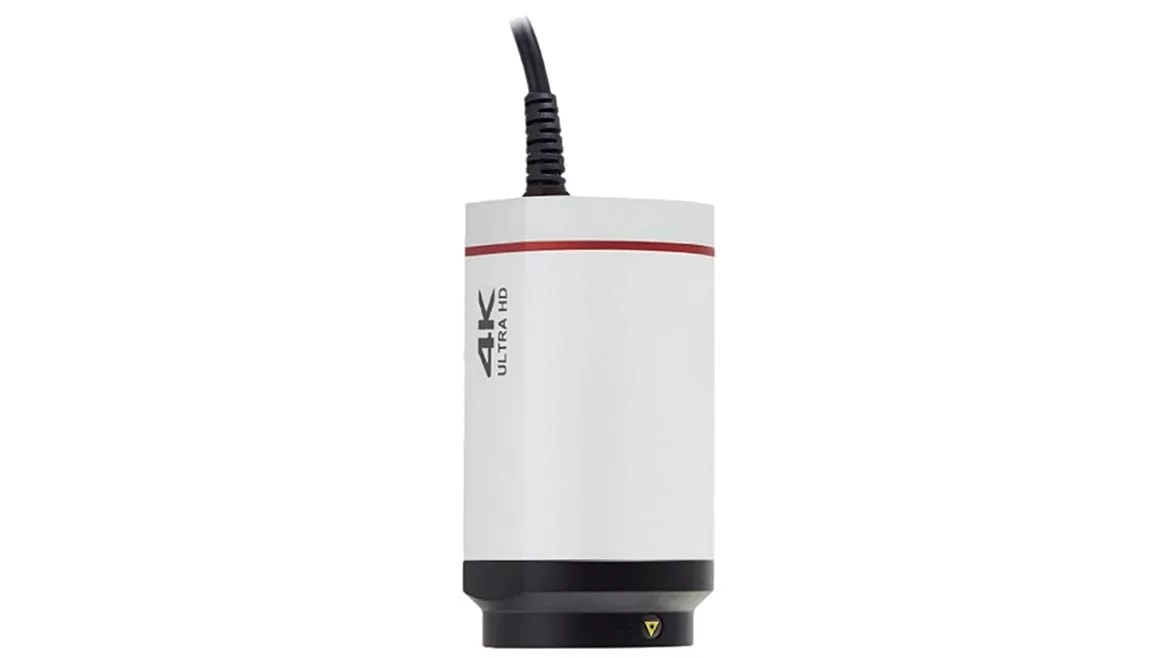
Fig 1. A modular 4K 60fps Digital Microscope Image Source: Inspectis AB
A digital microscope is simply a microscope that captures images digitally, rather than a strictly optical instrument that relies solely on optical viewing through an eyepiece. It combines optics with digital imaging technology, enabling real-time viewing, recording, and analysis of samples on a screen. Unlike optical microscopes, digital microscopes integrate high-resolution sensors, plus software for measurement, analysis, and often modular designs for industrial or scientific applications.
Digital microscopy bridges the gap between traditional microscopy and modern imaging technology. While it may not fully replace optical microscopes, particularly in high-magnification research, it is indispensable in fields requiring digital workflows, user-friendliness, and precision measurement.
Digital Microscopes vs. Traditional Microscopes
Traditional microscopes with 3D imaging capabilities provide advantages in depth perception, optical clarity, and real-world spatial analysis, while digital microscopes excel in workflow, documentation, ergonomics and ease of use. Analog optical microscopes offer zero-lag, real-time viewing without the processing delays or frame rate limitations of digital systems.
Optical techniques such as phase contrast and fluorescence microscopy are more effectively implemented in traditional microscopes without digital post-processing compromises. Also, traditional microscopes with high-quality, high magnification lenses (e.g., apochromatic objectives) provide better resolution and contrast for sub-micron features when compared to many digital microscopes, which may have magnification limitations.
Traditional microscopes remain superior for tasks demanding the highest optical fidelity, real-time interaction, or specialized contrast methods. Digital microscopes shine in documentation, automation, and ease of sharing results. The choice depends on the specific needs of the inspection task.
Digital microscopes excel in inspection tasks where digital imaging, workflow, remote collaboration, ergonomics, data analysis, measurements and documentation are critical.
The introduction of the latest 4K 60fps technology in modern digital microscopes has narrowed the gap with optical microscopes in terms of image quality and latency in real-time applications.
| 4K Digital Microscope | Traditional Optical Microscope | |
| Image Output | Digital (HDMI live feed, USB/PCIe to PC) | Optical (viewed directly through eyepieces) |
| Live Image Format | 2-dimensional displayed on the screen | 3-dimensional imaged visually with eyepieces |
| Magnification Range | Very low (1x) to medium | Low to very high |
| Depth of Field | Deep | Moderate to deep |
| Lag/Latency | Very low with 4K/60fps | No (real-time visual image directly througheyepieces) |
| Special Techniques | Image overlays, Focus Stacking (Extended Depth ofField), 3D Surface Reconstruction, Time-Lapse Video, Interval Display, etc. | Phase contrast, Differential Interference Contrast,Fluorescence. |
| Real-Time Sharing | Yes (streaming, remote collaboration) | No (unless camera added) |
| Software | Measurement, annotation, AI tools | No (unless camera added) |
| Automation | Motorized focus/zoom. Remote control | Manual adjustments |
| Ergonomics | Screen-based. Reduces eye and neck strain | Eye and neck strain from prolonged use |
| Workflow Efficiency | High | Moderate |
Fig 2. Comparison of 4K Digital Microscopes with Traditional Optical Microscopes.
Structure of a 4K Digital Microscope
A modern 4K digital microscope integrates an 8.4Mp image sensor, motorized zoom optics, electronics, and software to capture, process, and display images. Key components of a 4K digital microscope include the following:
- Motorized 1:30 to 1:50 zoom lens with autofocus.
- 4K/30fps or 4K/60fps image sensor.
- Electronics for signal processing, control and I/O.
- Mechanical structure.
- On-board and remote camera and lens controls.
- Connectivity via HDMI or USB.
- Software.
4K/30fps or /60fps Video Technology
A digital microscope with 4K/60fps technology offers 3840×2160-pixel resolution and 60 frames per second, providing four times the detail of standard 1080p Full HD and twice the number of frames of a 2060p 4k/30fps.

Fig 3. Comparison of FHD and 4K image formats and frame rate. Image Source: Inspectis AB
The 60 frames per second signal processing and display ensures smooth, real-time video without motion blur and nearly zero lag. High frame rate is critical for dynamic tasks and real-time inspection of moving objects, e.g., soldering, densely packed electronic cards, microstructures, fine mechanics and live organisms.
4K/60fps requires massive data processing and throughput (~12 Gbps for uncompressed 8-bit 4:2:2 video). To handle 12 Gbps, a digital microscope needs high-speed connections such as HDMI2.0 (supports 18 Gbps).
What Characterizes a Professional Digital Microscope?
A high-quality digital microscope is characterized by a combination of optical performance, advanced features, and robust construction that ensures precision, clarity, and versatility.
Optical Performance
While high-resolution image sensors (e.g., 4K) are often marketed as the key feature of digital microscopes, optical performance (lens quality, light gathering, contrast, and aberration control) is far more critical for accurate imaging. The lens must be able to maintain sharpness and color across the entire zoom range and field of view, resolving fine details with contrast loss at high spatial frequencies. A good zoom lens for 4K digital microscopes should resolve, at a minimum, 10 lp/mm across a 100mm field of view and at a minimum of 100 lp/mm across a 10mm field of view.

Fig 4. A typical Resolution Test Bar for measuring resolution power of digital microscopes in lp/mm. Image Source: Inspectis AB
The lens must also be able to image the inspection object with minimal distortion and prevent color fringing and vignetting. Distortion control is particularly critical if the digital microscope is used for performing geometrical measurements. The lens must maintain a flat field focus, which means uniform sharpness from center to edge.
Numerical aperture of a lens is a critical optical parameter that determines its light-gathering ability, resolution, and depth of field. In a 4k/60fps digital microscope, each frame lasts 1/60 ≈ 16.67 ms. Numerical aperture must be high (low F-number) to enable the image sensor to capture bright images at approximately 10 milliseconds exposure time. For critical applications e.g., semiconductor inspection, micro-structures, pathology, optical brightness (High NA) shall always be prioritized over electronic amplification of the video signal (Gain) which is normally available in digital microscopes. A high-performance lens balances optical performance, mechanical precision, and durability.
Focus Mechanism and Stability
The precision and stability of a digital microscope’s zoom and focus mechanisms directly determine its imaging accuracy, repeatability, durability and usability across scientific, industrial, and medical applications.
Even slight mechanical play can shift the image, causing unintended lateral movement during zoom in/out.
Poor autofocus mechanics in a digital microscope can cause z-axis wobble, create ghost images, cause focus offset and distort dimensional measurements.
The implications of unstable mechanical design in zoom and auto-focus lenses for digital microscopes are far-reaching, affecting imaging performance, measurement accuracy, operational efficiency and life of the equipment.
Instrument Design
Industrial-grade materials such as aluminum are preferred for shock, dust and moisture resistance in professional digital microscopes.
Heat from the sensor and 4K/60fps video processing can warp components, disturb optics and reduce their working lifespan. A smart and robust mechanical design with effective cooling is critical for stable operation of 4k/60fps digital microscopes in heavy workflows.
Cable Management & Design
Good cable management in digital microscopes is critical for ensuring efficiency, safety, and ease of use. High-end, modular digital microscopes incorporate a single compound cable design that can be routed along the microscope arm, keeping the working bench clean and the cable out of the way during operation.
Fine-stranded conductors, abrasion-resistant insulation and strain relief protect the cable from material fatigue, especially in applications where the digital microscope must be constantly moved over the inspection object.
The digital microscope’s HDMI2.0 cable must ensure high signal integrity, strong shielding, and durable connectors to deliver stable and high-quality 4K/60fpa video without signal degradation.
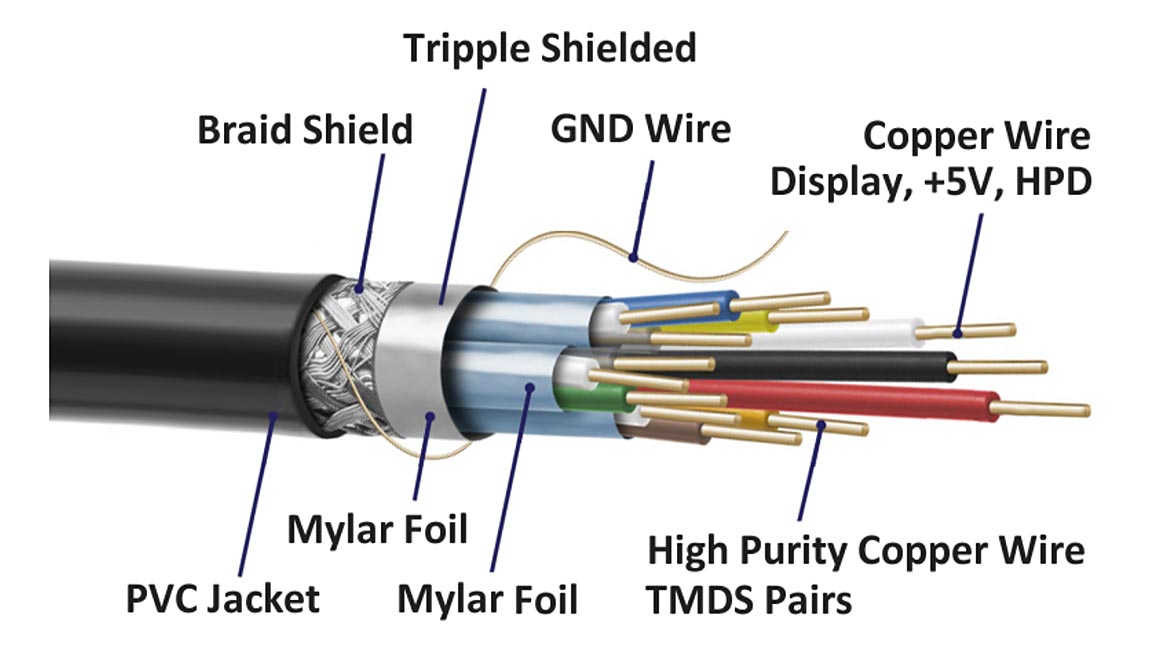
Fig 4. Structure of a high quality HDMI2.0 cable for transmission of 4K/60fps video.
Image Source: Inspectis AB
EMC & Immunity
Ensuring electromagnetic compatibility (EMC) and electrostatic discharge (ESD) immunity is essential for reliability, accuracy, durability and regulatory compliance.
High-speed digital signals in 4K/60fps microscopes are susceptible to electromagnetic interference from surrounding machines and equipment. Poor EMC shielding may cause noise in video feed (flickering, pixelation, lag), interrupted video feed, reduced frame rate, and data corruption in captured images.
The digital microscope emits high-frequency signals that can interfere with medical devices, sensitive lab instruments and other surrounding equipment if not designed and shielded properly. Good PCB design and layout as well as a metal enclosure are key components of good EMC and ESD immunity.
Failure to establish ESD immunity risks permanent sensor damage (dead pixels, color shifts or microcontroller resets, i.e., sudden shutdowns), and can corrupt HDMI and USB ports.
Interface & Connectivity
An uncompressed 4K/60fps digital microscope with 8-bit RGB color depth requires 11.94 Gbps bandwidth. Various interfaces to connect with displays, computers, and storage devices such as HDMI, USB-C and Gigabit Ethernet support this bandwidth.
For image capture and video recording in computer environment, high-end USB-C (20 Gbps) or PCIe card (16 Gbps) converters are used. Both USB-C and PCIe interfaces introduce a slight amount of lag depending on software optimization and computer specification when compared to an HDMI interface.
Lighting & Illumination
High-speed imaging requires flicker-free, adjustable LED lighting. Homogeneous diffuse lighting with optimized color temperature minimizes reflections while preserving object color and detail.
Software & Compatibility
Software is a critical component of digital microscopes, transforming them from simple imaging tools into powerful, multifunctional systems for analysis, documentation, and automation. Features such as camera and lens control, image and video capture, image enhancing filters, measurements, annotations, focus stacking, automatic counting, time-lapse video recording, overlays and digital graticules on a live image, and a report generator make the digital microscope indispensable for scientific, industrial, and educational applications.
Recently, AI has become more widely used in digital microscopy, transforming it into a faster, more accurate, and accessible tool in various fields. Multiple solutions from different providers deliver LLMs (large language models) or AI Vision solutions, featuring dashboards for creating models, with no LLM creation required. Applications that support large product runs, or prototype and short-run efforts are both addressed with unique AI toolsets.
Conclusion
Digital microscopy bridges the gap between traditional microscopy and modern imaging technology. As the technology continues to advance, we strongly believe that we must continue to build on recent successes and strengthen our efforts to market digital microscopy, with the latest 4k/60fps technology, to a broader target group in order that the promise and benefits of digital microscopy may be realized to their fullest potential.
Looking for a reprint of this article?
From high-res PDFs to custom plaques, order your copy today!