Test & Inspection
What Should You Consider When Choosing a Ring Light for Optical Inspection and Quality Control with Digital Microscopes?
For efficient and reliable inspection and quality control of electronic boards in SMT lines, it is crucial to carefully consider the characteristics of your light source.
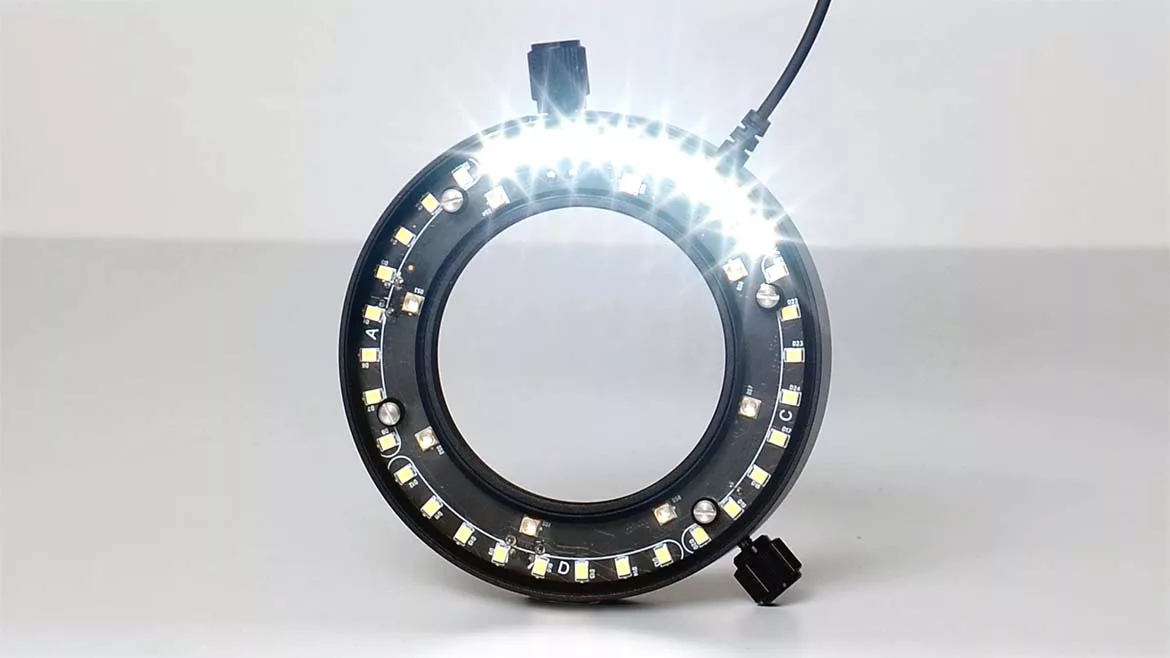
Fig 1: A modern White/UV ring light with 32 white LED:s arranged in 4x8 segments and 8 high intensity UV LED:s from Inspectis.
Lighting is arguably one of the most critical factors in the optical inspection tasks using modern 4K digital microscopes. Proper lighting determines whether defects are visible, measurable, and classifiable. Lighting is not merely an accessory but a foundational component of optical inspection systems and directly determines image quality, detection capability, measurement precision, inspection time and overall cost-effectiveness.
The most common LED lighting in optical inspection, quality control and metrology in the electronics SMT industries are incident brightfield (ring light and coaxial light), multi angle (segmented ring light), polarized (ring light) and UV/fluorescence (ring light). In this article, we explain which characteristics of ring lights need to be considered to achieve the best results and discuss their impact on optical inspection and quality control with digital microscopes.
What are the critical parameters of a professional ring light?
Geometrical and optical properties of a ring light, when used as the primary light source for digital microscopy have a profound impact on the quality, reliability, and consistency of the optical inspection task. The main characteristics of the ring light involve brightness, uniformity, illumination angle, light direction (sector control), polarization, fluorescence, color temperature (CCT) and rendering index (CRI).
High Brightness is Important for 3 Reasons
In digital cameras, brightness of the image is controlled by electronic shutter, iris of the lens (aperture) and gain. Gain increases image noise and reduces overall image quality, which can be critical for detailed tasks like electronics inspection. Brightness of the ring light ensures that there is enough light for the camera to create sharp images without using electronic amplification (gain) even at narrow apertures and fast shutter speeds.
To create a large depth of field, aperture of the lens must be narrowed. A small aperture physically restricts the amount of light that passes through the lens and reaches the camera sensor. To compensate for this loss of light and maintain a correct exposure without causing motion blur due to slow shutter speeds or digital noise due to gain, the brightness of the ring light must be sufficient.
Using polarizing filters to remove glare from highly reflective surfaces of solder joints, significantly reduces the light reaching the image sensor. Higher illumination brightness, typically 3–4 times more, is necessary to compensate for this loss and maintain a clear image.
How Important is the Number of LEDs in the Ring Light?
A uniform lighting is essential for inspecting shiny objects such as circuit boards. Large number of LED light sources in ring light in combination with a diffuser filter produces the most uniform illumination. Non-uniform, hard lighting e.g. ring light with few light sources (4-10 LEDs), especially without a diffuser produces directional shadows and obvious bright hotspots on curved or shiny surfaces of reflective object such as solder joints.
Illumination Angle, an Underestimated Parameter
The angle of incident light rays has a direct impact on the image quality and appearance of the inspection objects, especially electronic circuit boards. It determines the level of unwanted reflections and/or glare from the shiny surface of the inspection object and dictates which specific defects become visible.
Low-incident-angle ring lights e.g. a small-diameter ring light with LEDs close to the lens provide uniform and shadow-reduced light from all sides. It works well for illuminating matte surfaces but creates glare from shiny surfaces. In most cases it offers a balanced illumination for general overview and quality control of components and solder joints in assembled electronics boards, but at higher zoom factors (low field of view).
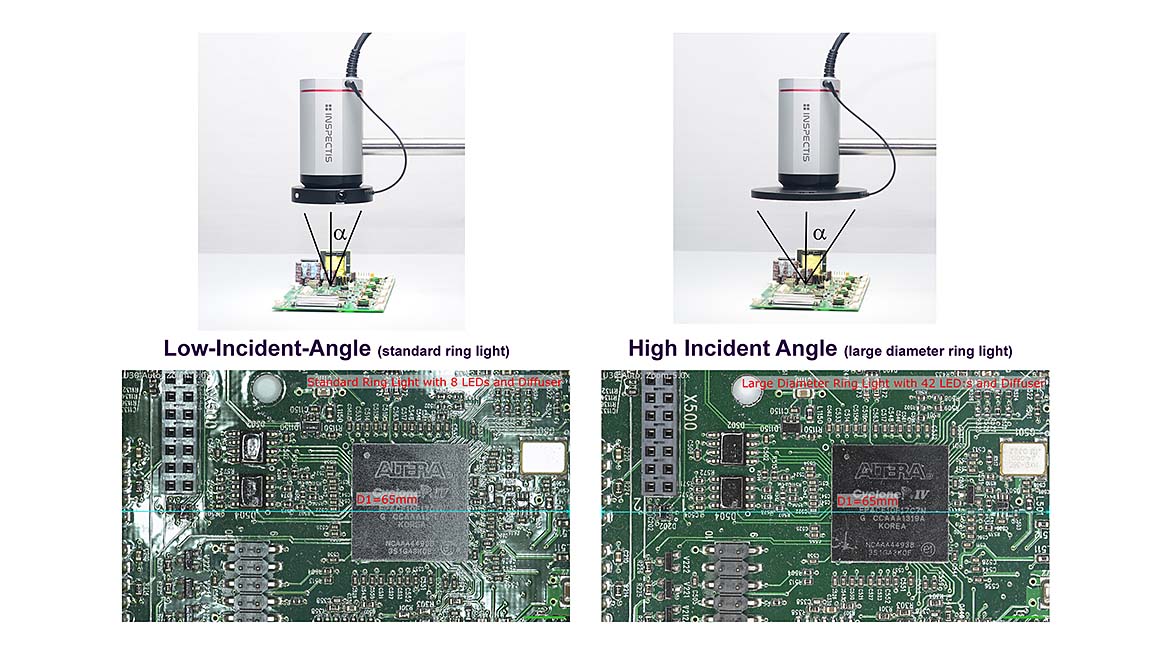 Fig 2: Image of a PCBA with standard and large diameter ring lights and their impact on the image of PCBA.
 Image Credit: Inspectis
High-incident-angle lighting e.g. ring light with a large diameter and LEDs far from the lens, reduces glare and allows working with larger field of views. Although this lighting is very soft and, it emphasizes height and texture; revealing raised leads, cracks, uneven solder paste, and surface irregularities.
Light Direction by Segment Control
Direction of incident lighting determines the interplay of highlights, shadows, and reflections on the PCB’s 3D topography. Changing the direction changes the visual information you receive.
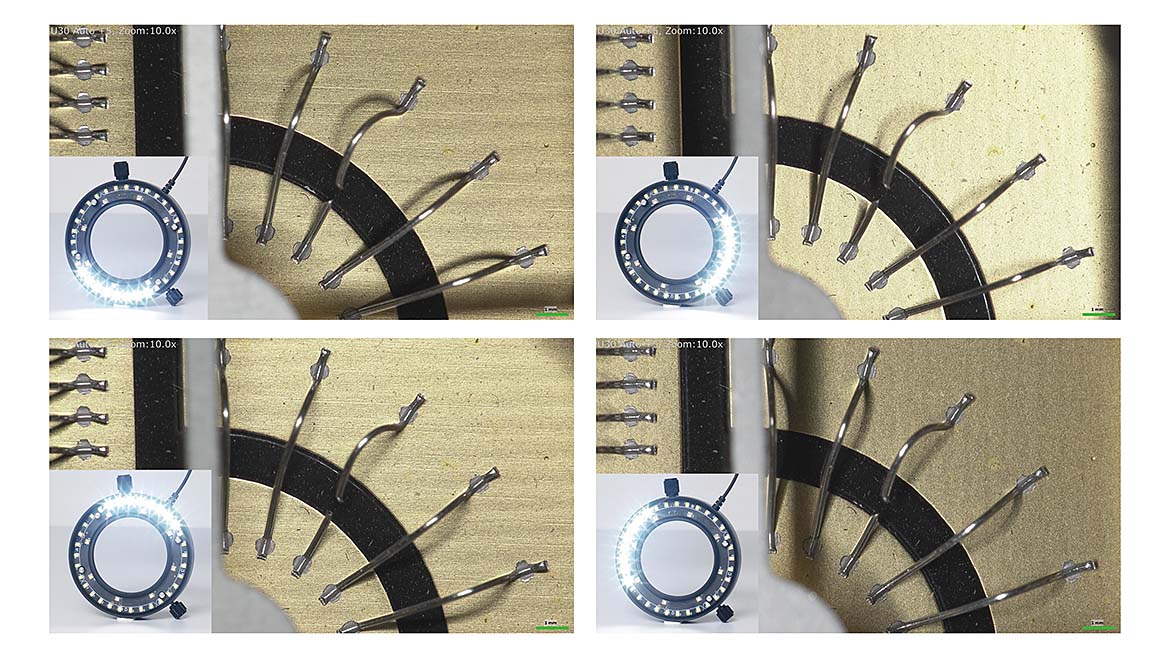 Fig 3: Impact of segment lighting on the image of bonds.
Image Credit: Inspectis
Four-segment ring lights add directional control to standard ring light benefits, allowing you to manipulate shadows and highlights to reveal different defect types. The incident oblique light from each segment creates long shadows that emphasize the height, texture, scratches, lifted leads and edge details, perfect for revealing 3D defects especially at high image magnifications.
Is a Diffuser Necessary?
Diffusers scatter the emitted light from LED light sources, turning small, bright, and directional point sources into a larger, broader, and more uniform illumination. In addition to improving color accuracy, the diffuser eliminates the intense reflections on shiny surfaces like solder joints. Although “hard” spot lighting is good for some imaging applications, a diffuser allows the digital microscope to produce overall higher image quality in most cases.
Why Polarization Filter?
Illumination with polarization technique eliminates unwanted glare and reflections. Its primary impact on PCB inspection is to reveal surface detail and material properties hidden by specular reflections from glossy or metallic surfaces.
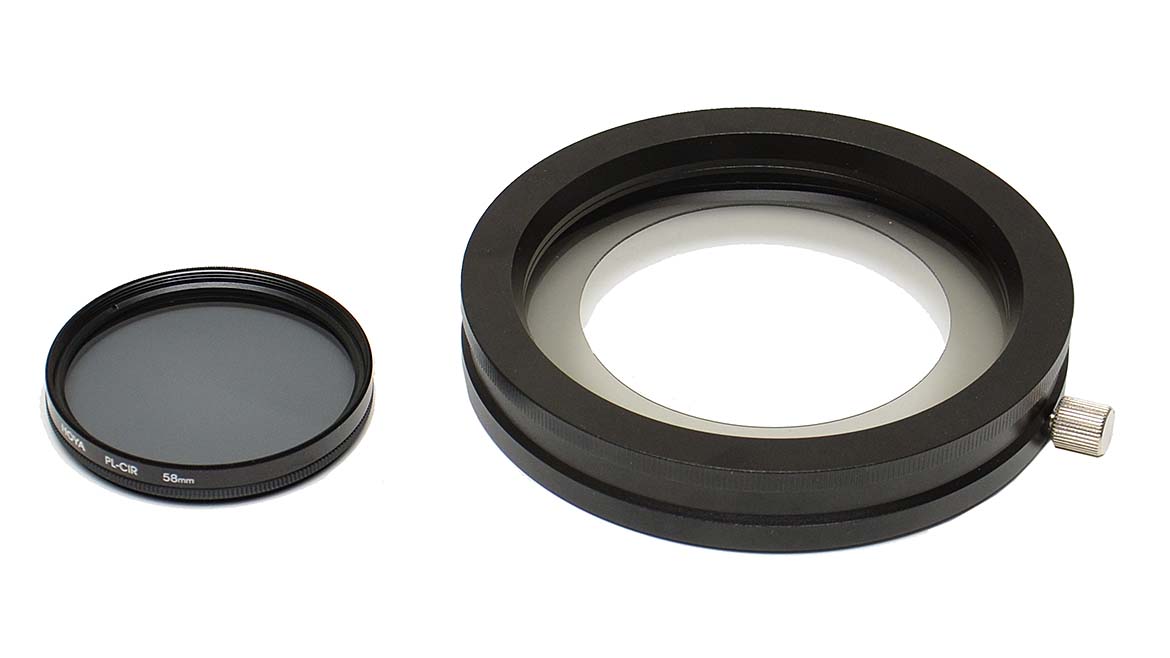 Fig 4: Polarizing filters for Ring Light and lens.
 Image Credit: Inspectis
Do you need UV for Fluorescence Lighting?
For conformal coating inspection, a UV-A light source, typically at 360-370nm wavelength is required to make the coating fluoresce for thickness and coverage checks. Using an integrated white/UV-A ring light offers significant benefits by combining two essential inspection modes into a single, efficient tool. The core advantage is that it allows for a faster, more accurate, and streamlined quality control process.
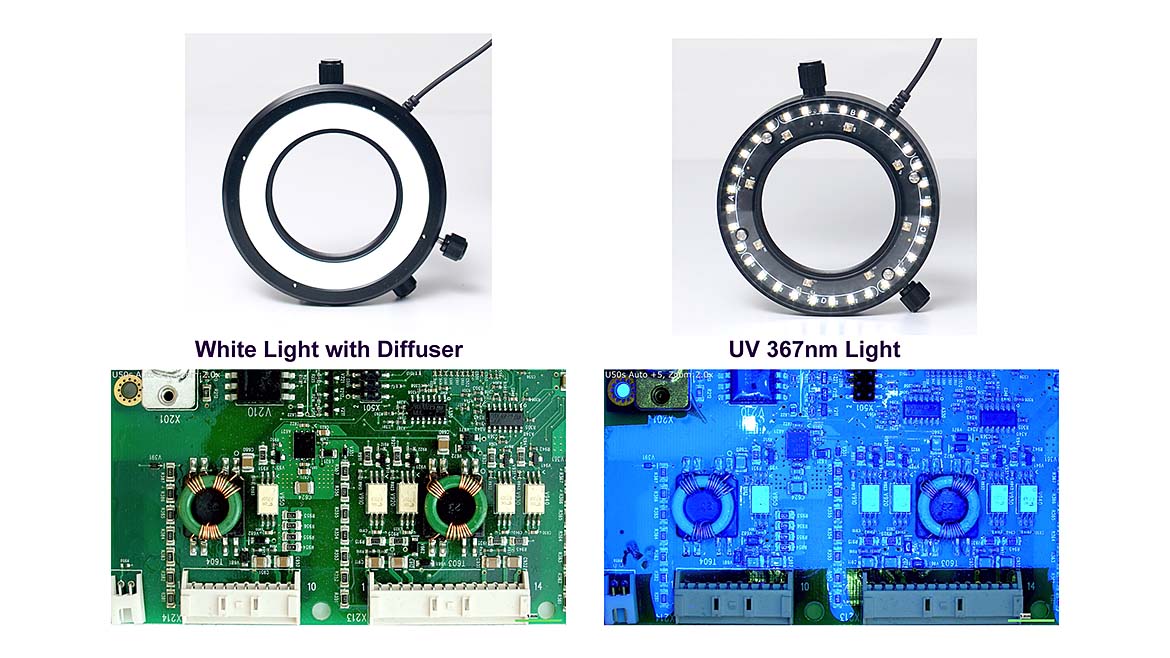 Fig 5: Image of a PCBA with conformal coating illuminated by a dual white- and UV ring light from Inspectis.
 Image Credit: Inspectis
Why Color Rendering Index Matters
CRI is a quantitative metric (0-100) that measures how accurately a light source reveals the true colors of an object compared to a natural reference source, idealized daylight or a black body radiator, i.e., the sun or a halogen lamp. CRI 100 means objects look exactly as they would under natural sunlight. CRI is an important characteristic to consider when choosing a ring light for digital microscopy, especially in color-sensitive applications.
Low CRI white LEDs are typically weak in the deep red region (around 630-660nm) and often have a secondary gap in the cyan/blue-green region (around 470-500nm). It makes colors look washed out, distorted, and have a cloudy tone.
For optical inspection using digital microscopes, illumination with a CRI 90+ is critical to ensure that the full wavelength spectrum for generating “true color” images exists. With a low CRI lighting, the camera’s signal processor must compensate for the lack of sufficient signal level in the red channel by electronically amplifying this channel more than green and blue, resulting in lower signal-to-noise ratio, lower color contrast, but also unstable white balance.
For tasks where only the geometry or location matters, CRI is a secondary comfort feature, not a technical requirement.
How about Color Temperature?
Correlated color temperature (CCT) and color rendering index (CRI) are independent measurements, but they are frequently confused. While CRI defines how “truthfully” the light shows the colors of objects, color temperature (CCT) tells you what “color” the light appears.
For general visual inspection work using a magnifier or stereo microscope (inspection, assembly, rework), a standard LED ring light at 6000-6500K (Kelvin) color temperature and a high CRI provides excellent, crisp illumination.
For digital imaging, 5400K - 6000K has been the first choice of professional microscopy manufacturers. 5600-5700K is considered a good compromise CCT for digital microscopy in the electronics manufacturing industry, providing a balance between color neutrality, contrast and consistency to color temperature standards used in industrial machine vision and quality assurance protocols.
Conclusion
The properties of a ring light, especially when used as the primary incident light source for digital microscopy, have a profound impact on the quality, reliability, and consistency of the optical inspection task.
For efficient and reliable inspection and quality control of electronic boards in SMT lines, it is crucial to carefully consider the characteristics of your light source, including brightness, uniformity, illumination angle, polarization, UV capability, color temperature (CCT) and rendering index (CRI).
Looking for a reprint of this article?
From high-res PDFs to custom plaques, order your copy today!