Measurement
Continuous Improvement and Development of Video Metrology Systems
Meeting modern inspection demands
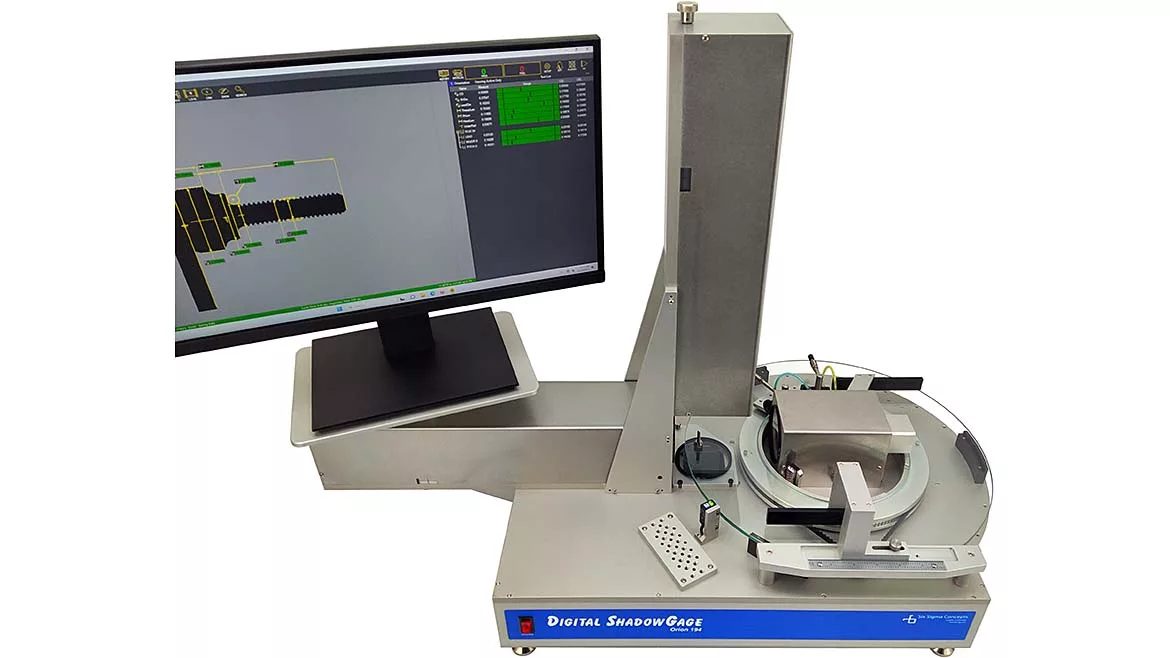
In the business world continuous improvement is the only antidote to extinction. For many businesses to thrive their metrology solutions need to adapt and improve to meet ever increasing inspection requirements. Your metrology systems need to measure more features with higher accuracies. With larger ranges and volumes of parts requiring inspection, there is demand for more inspection systems. Those systems need to provide faster results while accommodating a wider range of operator skills. Your systems need to be able to operate and be serviced in an increasing variety of environments. Improvements in systems need to be made with consideration for time and expense.
For metrology systems some of the most important incremental improvements can be made in the system’s consistency, serviceability, and supply. Sources of inconsistency need to be identified prior to any effort to improve consistency. Initially, these can be determined from anecdotal reports from production and feedback from end users. Accumulating reports and tracking revisions are used to evaluate which issues merit further investigation. Some improvements can be made by changing components or processes, while others may require monitoring and modification.
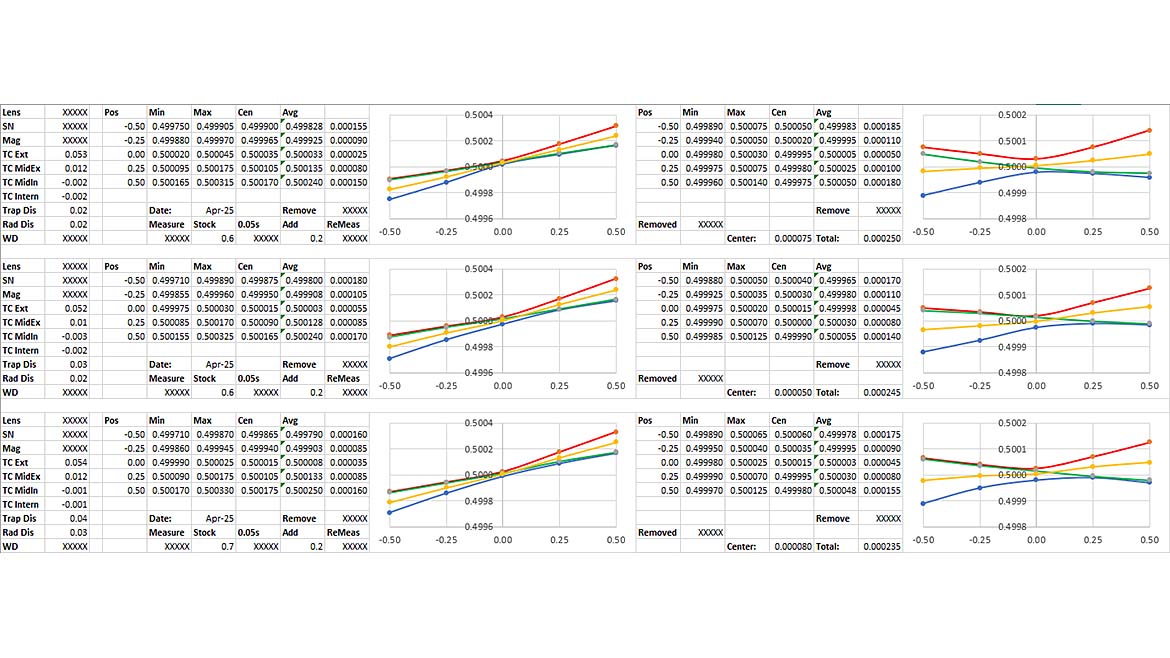
For vision systems, a significant factor that may require monitoring and modification can be the imaging optics, such as telecentric lenses. These lens assemblies can affect vision metrology through telecentricity, which is the change of magnification based on the distance to the object. No two lenses are exactly alike and, if the differences are too great, then the performance of the metrology systems that use those lenses will be inconsistent. One possible solution is to hold the lens assemblies to very high tolerances, but this is often not practical. A more viable solution is to correct for telecentricity, either by tracking the distance to the inspected part or feature, fixturing the part, or adjusting the optical elements of the lens. When finding the inspected part’s position or fixturing the part is not practical or desirable, then the physical lens elements need to be adjusted. This requires measuring the telecentricity, tracking those measurements, and setting acceptable limits for the required correction.
Component inventory and supply need to be addressed to be able to provide more metrology systems with faster lead times. Tracing and logging component inventory is critical to improving production efficiency. Tracing helps with serviceability by matching components and configurations to each metrology system. Logging and tracking inventory allows for production to remain uninterrupted. Improving the efficiency of data collection can provide more reliable data with less effort. This can be accomplished using scanning technologies such as bar codes, QR codes, and RFIDs. When parts are scanned, they can be automatically logged in inventory programs. Those programs can set alerts for when and where to order components based on their demand and lead time.
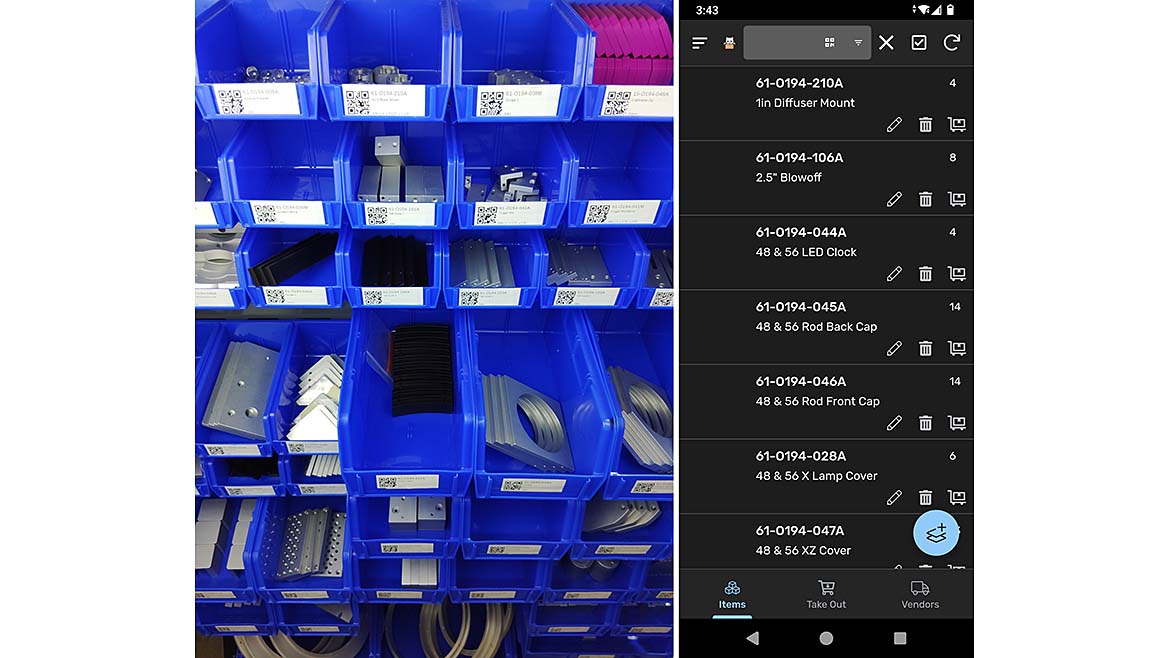
When systems are continually being developed, it is critical to log the components of each system. Components that are revised need to be noted regarding the serial numbers of each system that they are installed in. If an issue becomes known with a particular component, then it is much easier to service other systems with the same component. If a component needs to be replaced, then the revision or configuration may be critical to the replacement component or procedure. Tracking the service history of each system helps with the identification of systemic and individual issues.
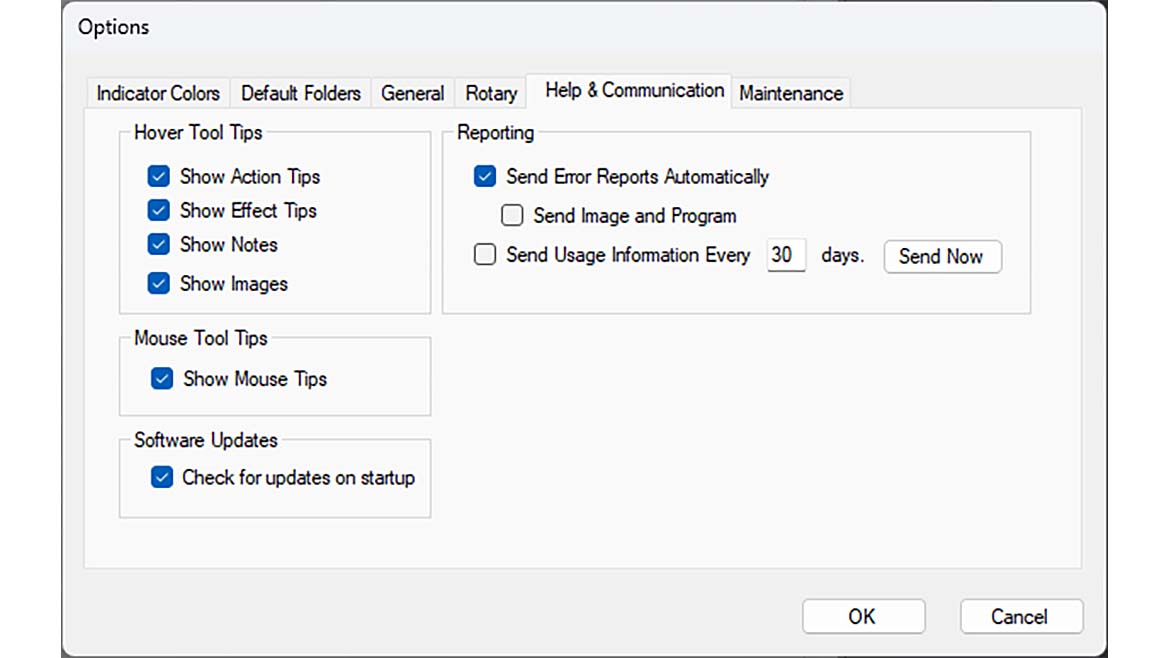
Software is the core of the operation and performance of many metrology systems. Being able to update a system’s operating software provides a powerful method to affect continuous improvement and development. There is great value added to a product when end users receive updates that improve the usability, measurement consistency, and measurement capabilities. This is especially true when the updates are based on user feedback. Automated and manual error report collection is essential when attempting to correct software issues and when testing new features. End users are not always able to identify particular problems and many different causes can present as the same error. Built in error reporting and diagnostic tools greatly help with identifying the actual source of an error within the code of the software. Being able to correct those errors improves the user experience and measurement consistency. Automated reporting also helps when implementing new features, finding issues with and resulting from newly added code.
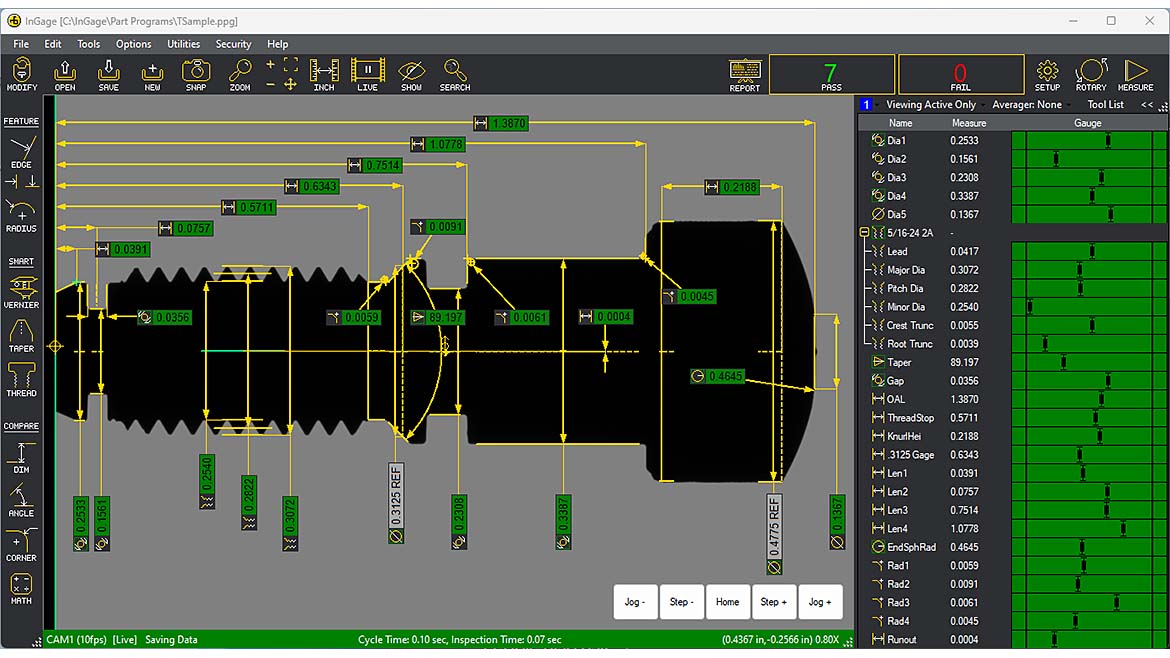
Video metrology systems provide objective measurements based on the conditions set by the operator. Similar to other software that deals with models or drawings, the inspection positions, regions, and conditions can be saved and edited together as individual inspection part programs. The UI, user interface, is the medium that the operator uses to create, edit, and operate inspections. Many factors can be improved: the display of information and instructions, as well as simplifying and clarifying commands and operations. Information is generally conveyed via images and text. Graphics and icons help the user quickly recognize and understand the function of particular tools and measurements. Text can convey more complete information with less ambiguity than images. Menus, tabs, and drop-down lists allow for more information, control, and functionality without cluttering the interface or overwhelming the user. Tool tips clarify what an option or control does or what steps are required to complete a setup or operation. Another critical component of the UI is the ability to navigate. Zoom and pan controls aid in the investigation of an image and the setup of inspection elements. The ability to copy and paste one or more inspection elements, as well as the ability to undo and redo inspection element changes can save users a significant amount of time. Adding and improving the elements of the UI provides a great value to system operators.
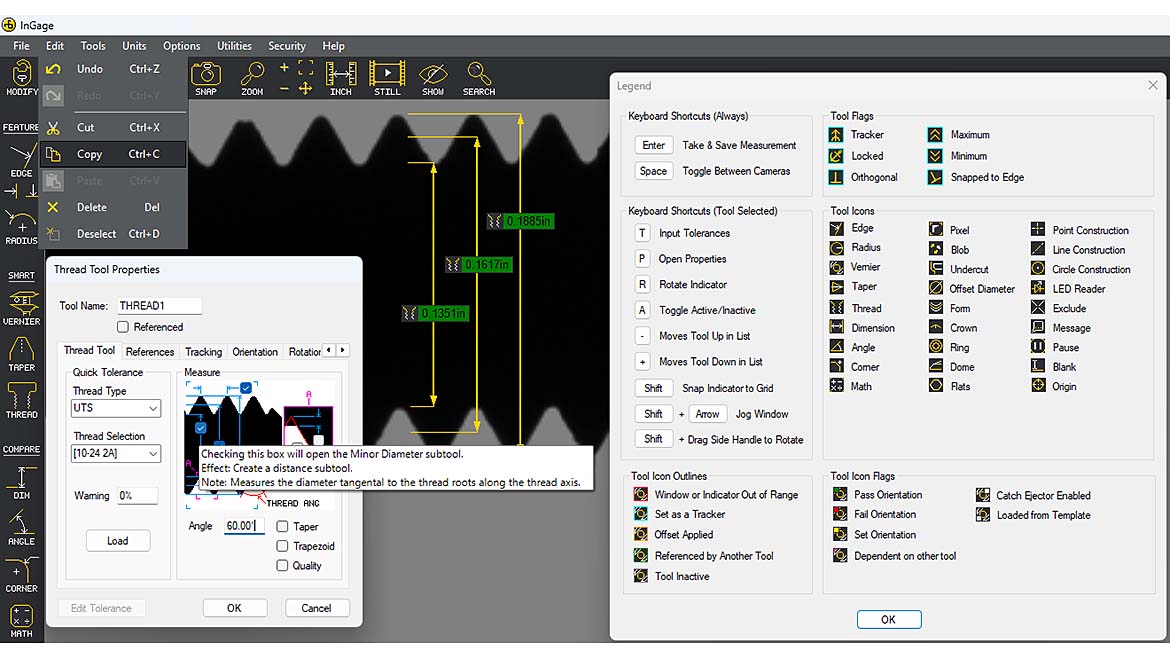
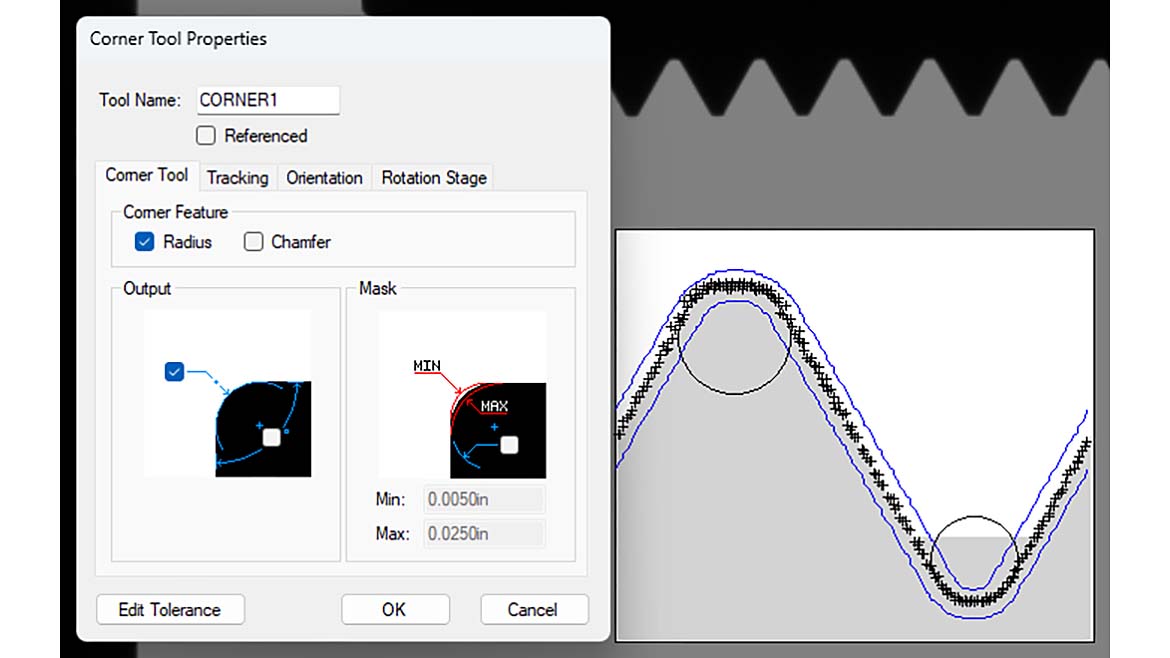
The inspection software can undergo continuous improvement by adding and updating elements to increase the types of features that can be inspected. Often dedicated tools need to be created for unique features. For example, the inspection of small chamfers and radii is often unreliable. Creating a tool to inspect these features aids with the detection and measurement of corners. Setting constraints for the corner placement and features that lead into the corner can greatly improve the inspection consistency. Threads are another feature type that often has unique inspection requirements. Not only do the different values of the threads need to be measured, individual outliers need to be identified. Inspecting the whole length of a particular thread allows for more reliable thread measurement values and allows for the comparison of each individual thread to the average or ideal thread form.
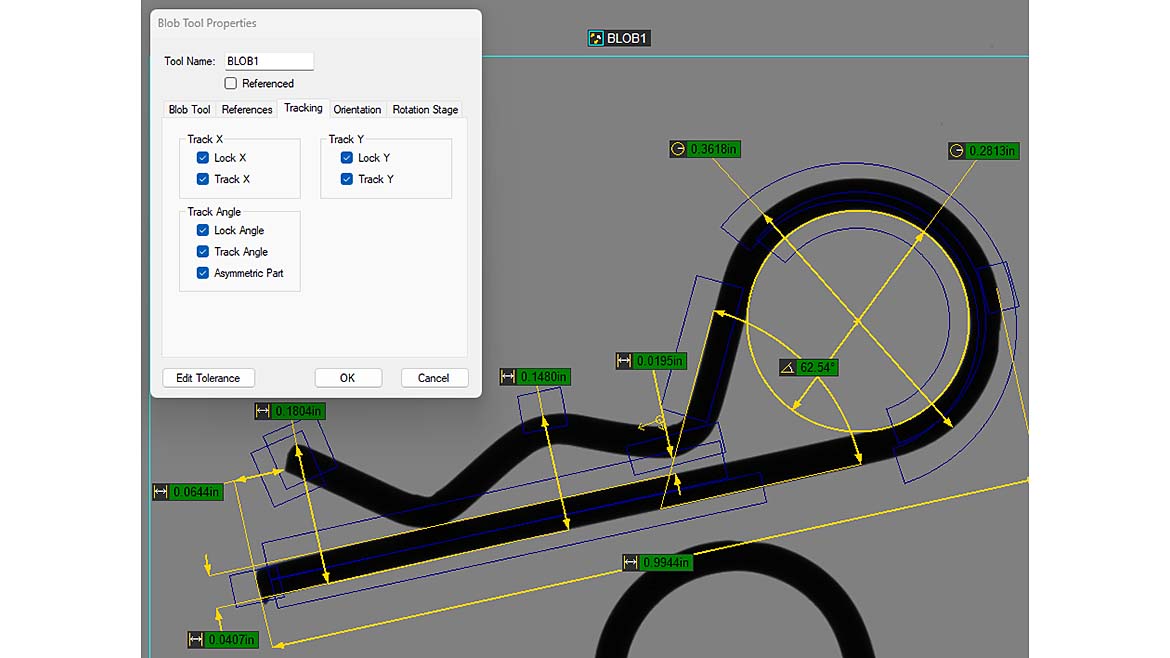
Along with developing tools that measure different features, functionality can be improved by increasing the conditions in which those measurements can be made. When samples are in motion, positions and timings need to be set as to when inspections are taken. If samples rotate, then all values need to be tracked and recorded. Conditions may need to be established to set when groups of measurements are and are not taken. If a sample is not fixtured, then the position and orientation of the sample needs to be determined before the inspection can take place. The regions that are being inspected then need to move and rotate to align with the sample. When multiple samples are present, the software needs to identify and align to individual samples.
Continuing to improve and develop metrology systems provides great value to existing and new customers, keeping you ahead of your competition.
Looking for a reprint of this article?
From high-res PDFs to custom plaques, order your copy today!