Case Study
1.7 Million Pins Per Day: Milestone in Connector Control
The biggest challenge when testing the pins is to ensure that they function perfectly even after assembly under a wide range of external influences, such as vibrations or moisture.
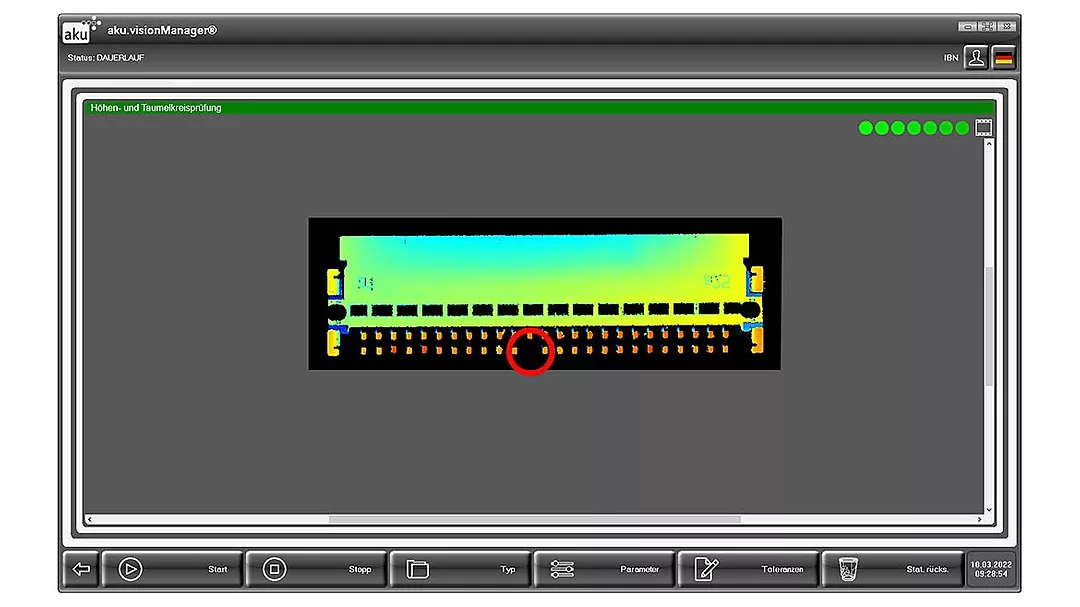
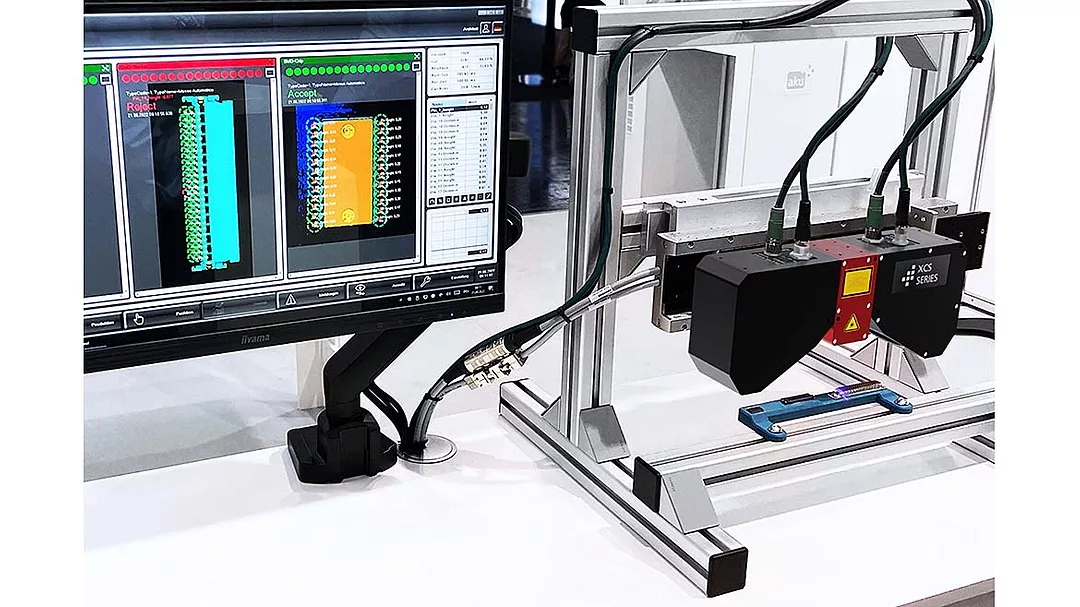
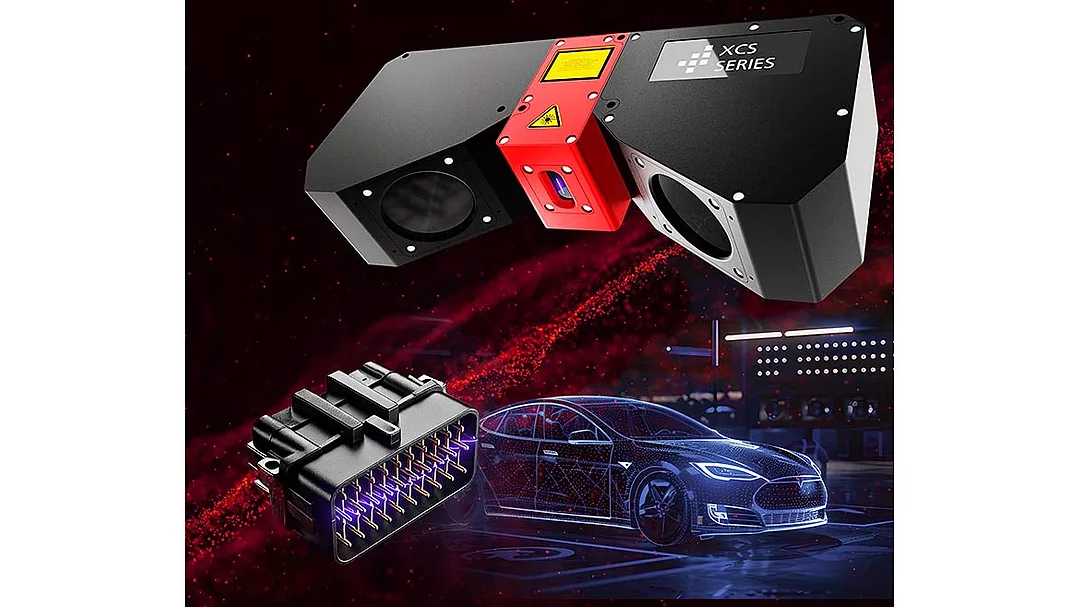
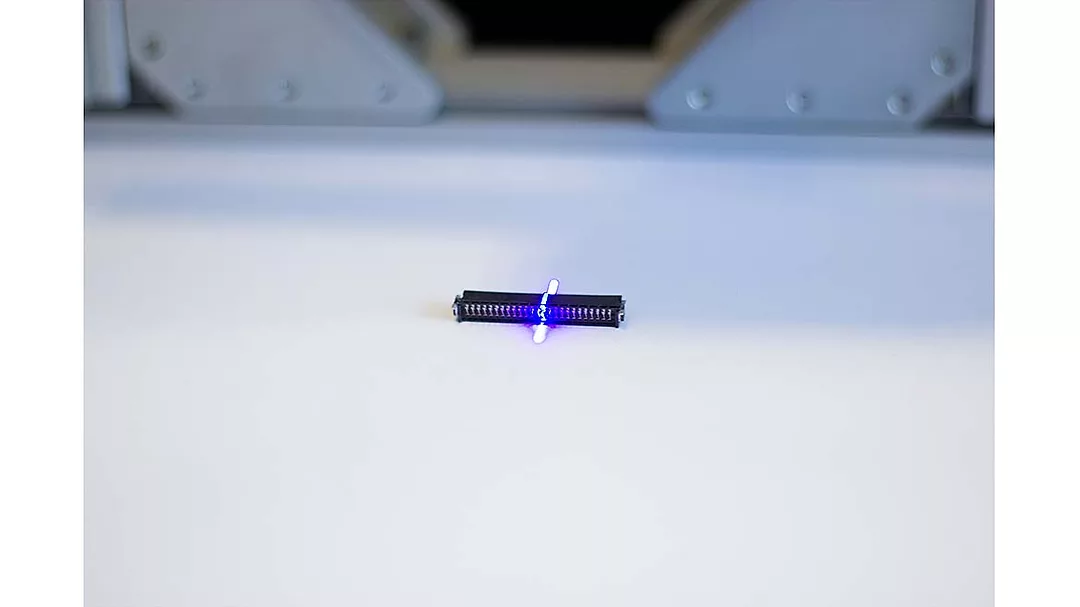
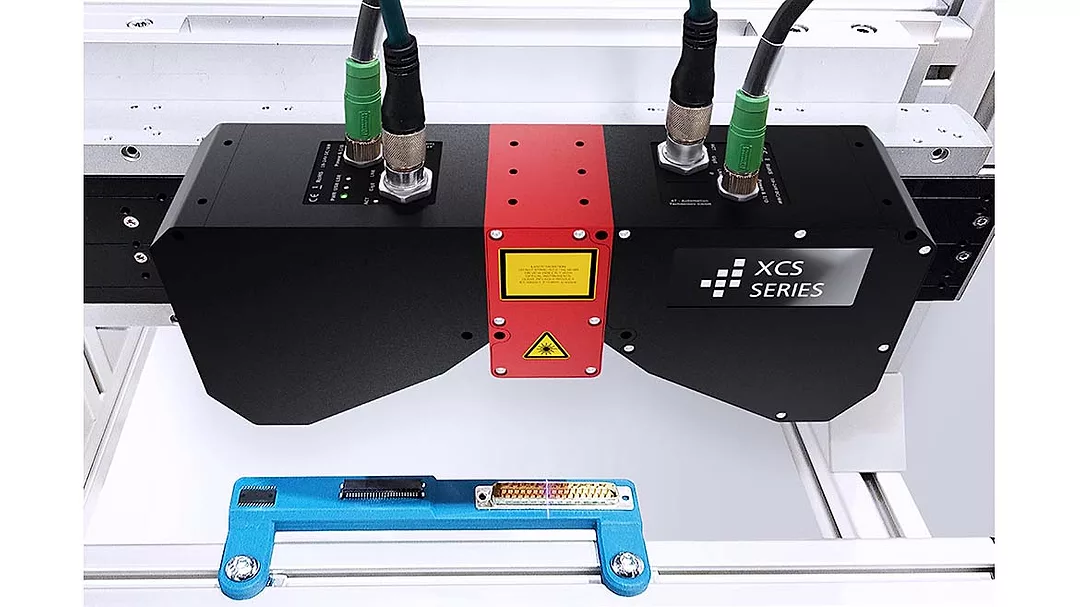
The connector application from aku.automation and AT Sensors, which inspects over 1.7 million pins every day with unprecedented precision, is setting a new benchmark in the electronics industry. At the heart of this solution is AT Sensors’ XCS 3D sensor, a true game changer that is transforming the inspection of electronic connectors for all automotive manufacturers. This collaboration between aku.automation and AT therefore offers a pioneering technology that not only ensures maximum reliability in quality assurance, but also redefines the standards for the entire industry.
The automotive industry has developed rapidly in recent years. Nowadays, almost every function in a vehicle is electronically controlled, from window operation to automatic light control. Electromobility in particular is playing an increasingly important role: in large markets such as China, electric vehicles now account for around 40% of cars sold, underlining the rapidly growing transition to electromobility. In Germany, too, the proportion of e-cars is now around 25%, a significant increase that illustrates the growing acceptance and spread of this technology. This technological evolution has led to an increasing demand for high-precision electronic connectors, which act as the backbone of the vehicle control system. A modern car contains up to 5,000 different connectors, totaling around 100,000 pins. These connections are essential for the functionality of vehicles, especially in the area of electronics and automation. Each of these pins must therefore undergo a strict quality check before installation, as even a single defective pin can cause the entire electronic system to fail.
This is where the expertise of aku.automation GmbH from Baden-Württemberg comes in. As one of the leading system integrators for image processing solutions, the company has developed an application in collaboration with the northern German technology leader AT Sensors that enables extremely precise inspection of pins. This inspection is carried out in continuous operation on up to 40 machines simultaneously, which means that more than 1.7 million pins can be inspected every day.
No occlusions thanks to XCS sensor with dual-head function
The biggest challenge when testing the pins is to ensure that they function perfectly even after assembly under a wide range of external influences, such as vibrations or moisture. The solution lies in the use of the 3D dual-head sensors from AT's new XCS series. These sensors make it possible to scan the pins of electronic connectors simultaneously from two sides, thus avoiding shadowing (occlusion) and achieving the highest possible precision.
The XCS sensor is also characterized by its optimized laser and a very small field of view of only 53 millimeters. The XCS series laser offers a uniform line thickness along the entire laser line, which is achieved by special optics in the laser projector. This homogeneity of the line thickness allows for high-precision scanning of the smallest structures, regardless of whether the object to be inspected is in the center or at the edge of the line. This is a decisive advantage for the quality control of pins, as an exceptionally high level of accuracy and repeatability is achieved.
Detection of the smallest surface details through high-quality laser line projection
Another outstanding feature of the XCS sensors is the clean beam technology developed by AT. This function protects the laser from external interference factors, such as optical anomalies, and ensures extremely precise and focused laser projection. Clean Beam also guarantees a uniform intensity distribution, which leads to consistent and reliable results.
“We have been working successfully with AT for many years and benefit time and again from the comprehensive expertise of this manufacturer. Thanks to AT’s innovative solutions, we were also able to meet the high requirements of our customers 100 percent in this application,” says Boris Gierszewski, managing director of aku.automation.
AT revolutionizes the electronics industry with new high-performance 3D sensor
The new XCS series from AT Sensors sets a new standard for high-performance applications in the electronics industry. “Our goal was to develop a 3D sensor that is ground-breaking in terms of precision. We have achieved this goal with the XCS series. The outstanding laser line projection and unprecedented resolution with a field of view of just 53 millimeters enable us to detect even the tiniest surface details, which is crucial in the quality control of pins. We are currently unrivalled in this area,” says Dr. Athinodoros Klipfel, sales manager at AT. Klipfel also emphasized the numerous features of the free AT software, which supports very detailed data output with features such as MultiPart and MultiPeak. MultiPart enables the simultaneous output of up to ten different image features, while MultiPeak allows highly reflective materials to be scanned without disturbing reflections.
Right from the start, aku.automation focused on innovation when developing a reliable solution for inspecting electronic connectors. An experienced team of developers worked intensively for over six months to realize the optimal design of the application. The challenge was to put together all the necessary components for a reliable system, program user-friendly software and integrate the output of quality data. To do this, aku.automation relies on image processing software called aku.visionManager, which then evaluates the data using AI-supported deep learning algorithms. This enables customers to read out their data in a simple and uncomplicated way.
Innovative use of the application by the customer
“Our priorities during development were a reliable quality procedure and ease of use for the customer. We therefore designed the application in such a way that it can be used for a wide range of electronic connector types and has a high multiplier effect,” explains Gierszewski.
The connector test developed by aku.automation and AT is now used by numerous well-known car manufacturers. The reject rate of defective pins always remains below one percent. This impressive success rate underlines the performance and reliability of the new 3D sensor solution.
Looking for a reprint of this article?
From high-res PDFs to custom plaques, order your copy today!