Vision
Machine Vision Ends Needless Operational Stops
Edge AI provides real-time analysis to identify true conveyor jams
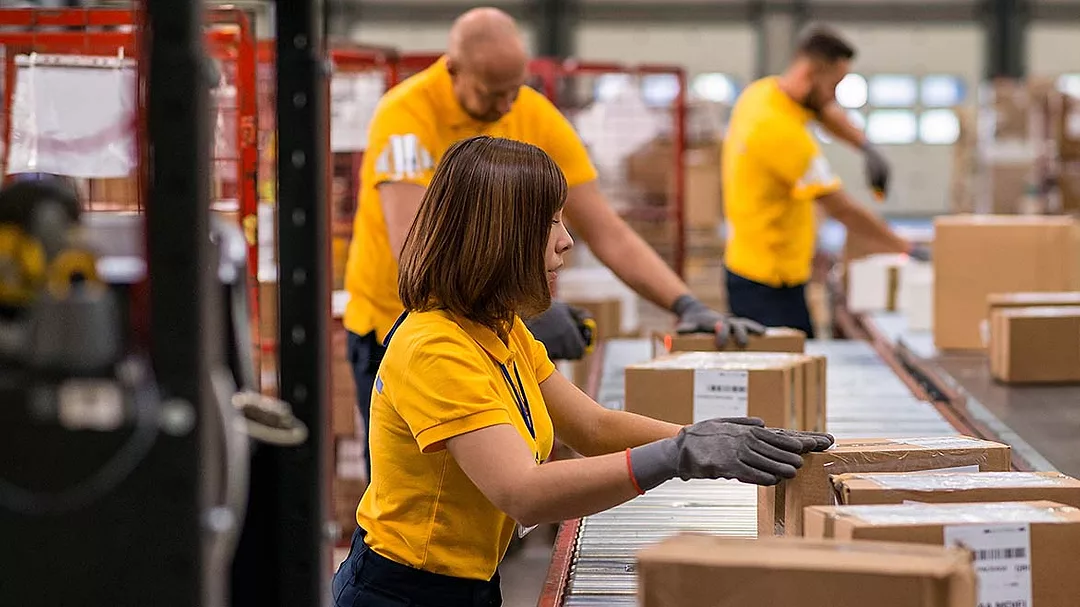
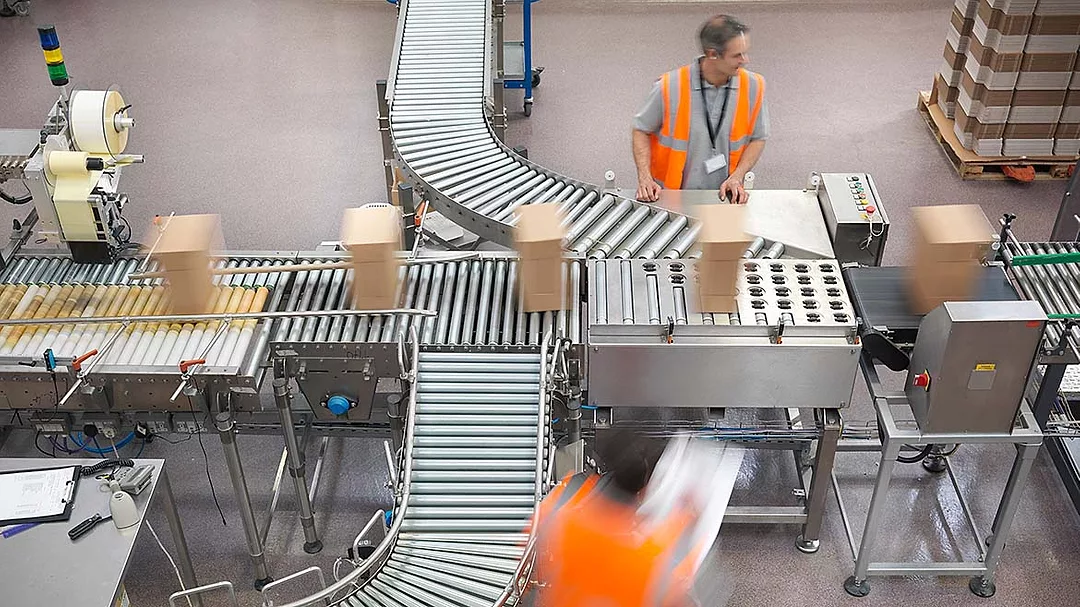
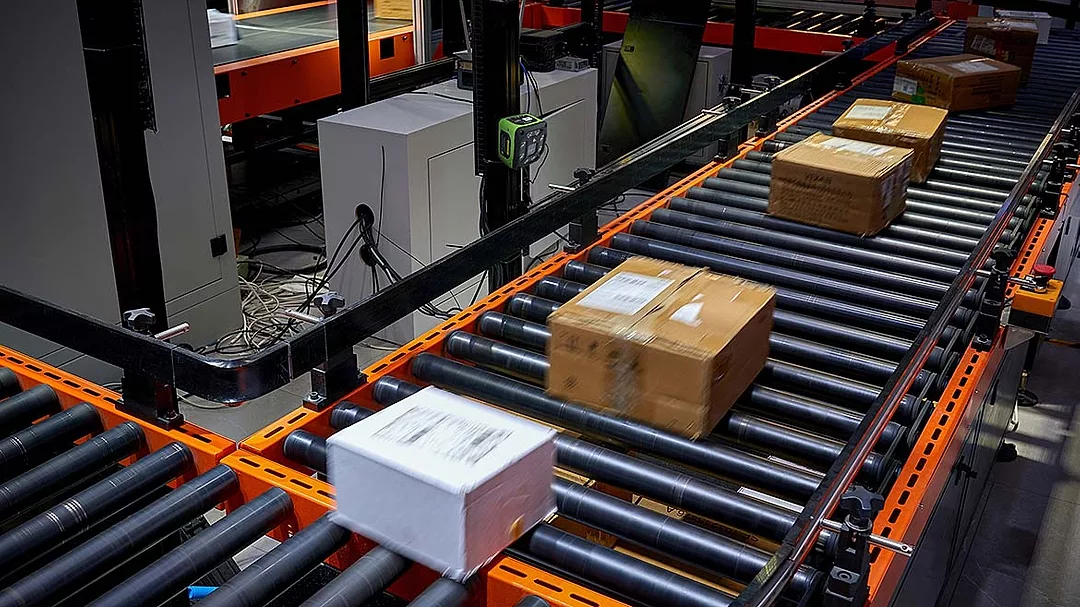
In highly automated facilities today, a familiar scene plays out with frustrating regularity. The central artery of a distribution center, a high-speed cross-belt sorter, stops diverting products. Red lights flash and alarms sound as a critical conveyor lane experiences a jam. Rushing to the location, an operator finds the culprit: a small, polybag that is stuck and tricked a sensor. Even a disruption lasting only minutes can trigger a cascade of delays, preventing packages from reaching their destinations on time.
Events such as this repeat thousands of times a day in facilities worldwide in the form of false jams - where a package momentarily shifts, slows, and hesitates before continuing - or a true jam where there is a total lack of motion. Either way, these recurring scenarios represent a chronic and costly issue with roots in the limitations of sensors designed for simpler times.
Although traditional photoelectric sensors perform as reliable workhorses, their simple binary logic fails to distinguish between a genuine, line-stopping blockage and a minor, non-critical obstruction that may clear itself. Solving this problem requires more than a better binary sensor; it demands a new layer of intelligence. By deploying AI-powered machine vision systems at the edge, facilities move beyond simple on/off logic, making informed, real-time judgments that dramatically reduce downtime, free up critical labor, and unlock new levels of throughput.
To grasp the problem’s severity, one must first understand the mechanics of a modern high-speed sortation system. Packages travel at high speeds on a large central conveyor. When a package reaches its designated diversion point, it is smoothly transferred onto a perpendicular conveyor lane that guides it down a specific chute toward its outbound destination.
A “jam” occurs when a blockage on one of these lanes triggers an alert, automatically halting the system from sending additional packages down the lane to prevent a pile-up. Critically, when the conveyor lane is closed, any packages destined for that chute cannot be delivered. Instead, they are recirculated and remain on the main conveyor line until the jam is cleared. This single event instantly reduces the facility’s sortation capacity and creates a growing backlog.
A photoelectric sensor is easily fooled. In a modern logistics environment (one filled with reflective shrink wrap, varied package sizes, and lightweight polybags), a sensor can receive a false trigger from debris, tightly packed but normally flowing items, or even shadows.
Each time this happens, consequences cascade. The direct costs of unplanned downtime in a large sortation facility can reach staggering figures, from $6,000 to over $20,000 per hour. The indirect costs inflict equal damage. Recirculating packages hurts overall facility throughput. Precious human labor diverts from value-added tasks to resolve what often amounts to a non-issue due to false jams. Every manual intervention in a live conveyor system introduces a potential safety hazard.
Beyond the operational metrics, the business impact is severe. During peak seasons like Black Friday, when throughput demand soars, the financial and reputational costs of these persistent delays multiply exponentially, potentially resulting in an erosion of brand trust.
To combat these inefficiencies, forward-thinking companies turn to machine vision and AI-enabled jam detection. This innovative approach replaces dozens of individual sensors with a single, AI-enabled vision-based camera overlooking the conveyor lane. Its success hinges on processing data “at the edge.”
With edge computing, a small, powerful smart camera positioned above the conveyor line analyzes and processes each image internally. There is no need to send images to a cloud-based server. Local processing provides the sub-second response times necessary for making judgments on a fast-moving conveyor. It avoids the need to stream high-resolution video from hundreds of cameras, an action that would overwhelm most enterprise networks. The system keeps running and making decisions even if the central network connection fails.
An intelligent edge system understands context in a way traditional sensors cannot. It employs several techniques to make its judgments, starting with its ability to “see” and “understand” motion. Through advanced object tracking and flow analysis, the system identifies individual parcels and analyzes their velocity and trajectory from one moment to the next. This crucial step is what allows it to distinguish between a temporary slowdown and a real problem.
It can perceive that a package is still moving slightly and may clear itself, whereas a basic sensor would simply detect a blockage and trigger a false alarm. By analyzing queues and density patterns, the AI also learns the visual rhythm of normal conveyor flow, often identifying signs of congestion before a full jam even occurs. The result is a system that filters out the noise, eliminating false jams and ensuring human intervention is reserved for true pileups.
The system’s true power emerges when the AI vision system, the “brain,” communicates with the Programmable Logic Controller (PLC). Consider two common scenarios. In the first, a true jam, the AI system detects a legitimate pile-up of stationary objects. Having confirmed a true blockage, it sends a simple “stop” command to the PLC, which halts the belt. Simultaneously, an alert goes directly to a worker’s mobile device, telling them precisely where to go and what to expect.
In the second scenario, a false jam, the AI detects a dense clump of packages or a small piece of cardboard. Its flow analysis confirms that the items are still moving so it does not act, allowing the minor obstruction to clear itself. The PLC never receives a “stop” command, and the line continues to run without interruption, avoiding costly downtime and freeing the employee to assist elsewhere.
The results of this shift are profound. Facilities implementing this technology have reported an up to 30% increase in overall facility throughput, a figure driven almost entirely by the dual benefits of reduced downtime and minimized worker intervention. The beauty of this solution is how its benefits cascade through an organization, addressing different success criteria at every level.
For the line engineer, success is personal: a dramatic reduction in false jam alerts allows them to better prioritize their work orders, focusing on genuine mechanical issues instead of chasing ghosts in the system.
For the business or operations manager, success is measured in throughput. By eliminating false jams and reducing package recirculation, the facility can process more goods with the same equipment and staff, directly boosting operational efficiency and service quality.
For the enterprise executive, success is strategic. The gains in throughput and reliability translate into fewer missed delivery deadlines which, in turn, decreases the hidden costs of poor fulfillment.
By replacing simplistic binary logic with intelligent decision-making, AI-enabled machine vision solves the false jam problem. While the technology is especially critical for transportation and logistics industry leaders, any operation that relies on conveyors stands to benefit.
With downtime costing thousands per hour, the significant savings from optimized labor and increased throughput can deliver a return on investment in a matter of months. But the real value goes even deeper. Once in place, the same infrastructure can pivot, often with just a software update, to a host of other quality and inspection tasks.
Looking for a reprint of this article?
From high-res PDFs to custom plaques, order your copy today!


