Test & Inspection
Crisis Mode: A Manufacturer’s Guide to X-ray CT Inspection Services for Critical Quality Situations
In a high-stakes situation, you need technicians who are formally certified and qualified to develop X-ray CT techniques to meet your requirements.
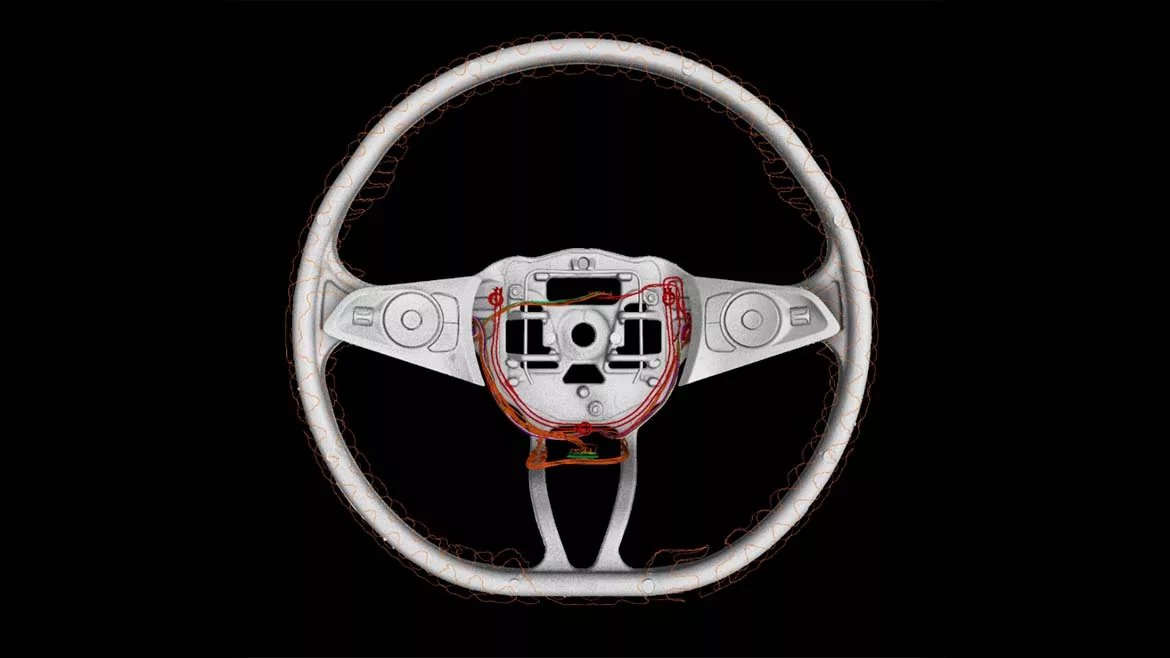
X-ray CT Scan of Heated Steering Wheel Showing Component Segmentation.
In manufacturing, quality problems don’t announce themselves in advance. They surface without warning — during a production run, after a shipment, or in the middle of a high-stakes project — and when they do, the clock starts ticking immediately. A line shuts down. A customer is waiting. Your team is under pressure to find answers fast, and the wrong move can turn a serious problem into a catastrophic one.
X-ray Computed Tomography (CT) inspection has become one of the most powerful tools available for exactly these moments. Its ability to reveal the internal structures of a component in precise, three-dimensional detail — without cutting, destroying, or altering the part — makes it uniquely suited for diagnosing quality problems that other inspection methods simply cannot reach.
But not all X-ray CT inspection services are created equal, and choosing the wrong provider during a crisis can cost you time you can’t afford to lose. This guide is written for manufacturers who want to understand what X-ray CT inspection services are, when they matter most, and what to look for when selecting a provider to support you through a critical situation.
What Is X-Ray Computed Tomography Inspection Services?
X-ray Computed Tomography (CT) inspection is a nondestructive testing method that uses X-ray technology to create a detailed, three-dimensional digital model of the internal and external structures of a component or assembly — without ever cutting it open. The technology works by rotating a part through an X-ray beam and capturing hundreds or thousands of radiographic images, which are then reconstructed into a complete 3D volumetric dataset for digital cross-sectional analysis. Engineers and quality professionals can then examine the part’s internal geometry, detect defects, measure wall thicknesses, identify voids or cracks, and verify internal features that are otherwise invisible to the naked eye.
The applications are broad. X-ray CT inspection is used across aerospace, automotive, medical device, electronics, additive manufacturing, and many other industries where internal quality matters and traditional inspection methods fall short.
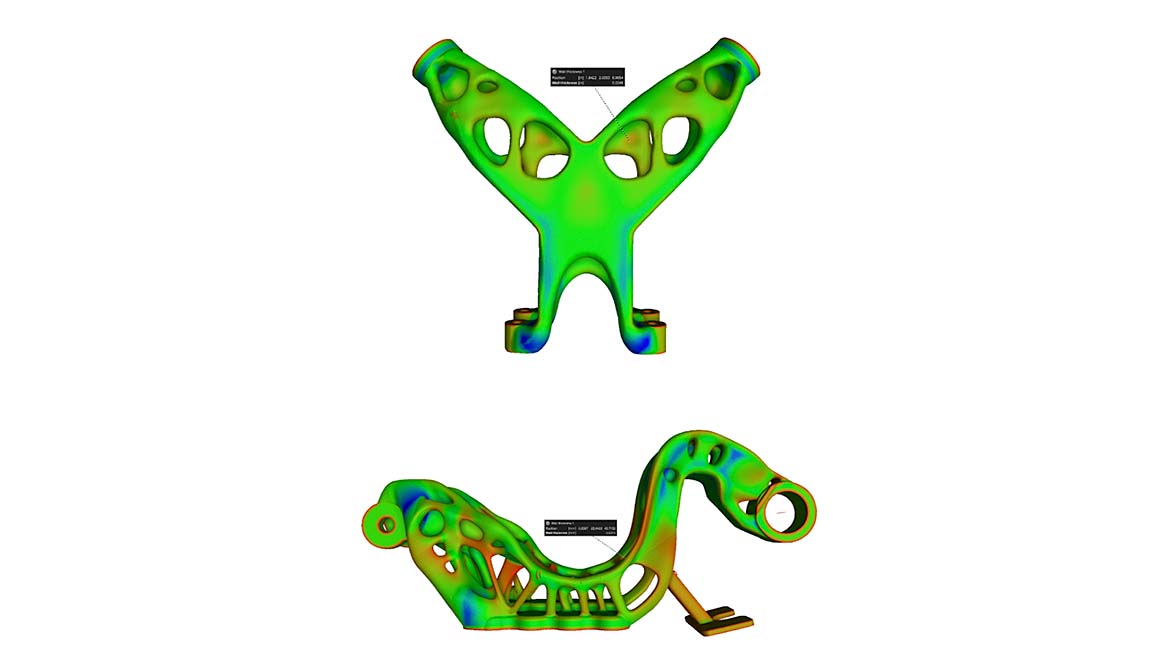
X-ray CT Scans of Metal Additive Manufactured Support Brackets Showing Wall Thickness Analysis. Source: Nikon Metrology
Three Reasons Manufacturers Use X-Ray CT Inspection Services
Not every manufacturer needs to own an X-ray CT system. For many, using an inspection services provider makes far more practical sense. Generally, there are three types of situations that drive manufacturers to seek out these services:
1. Standard Projects
These are typically smaller-volume, occasional inspection needs. A manufacturer might need a handful of parts evaluated for a specific characteristic — perhaps during a product development phase or as part of a periodic audit. The scope is typically well-defined, and the timeline is manageable.
2. Production Scanning
These are regular, larger volume projects with a known scope and established imaging parameters. The manufacturer and inspection partner typically work together to create and validate a reliable technique to execute consistently over time for optimal productivity and cost efficiency.
3. Critical Response Situations
This is where urgency drives everything. A major quality issue surfaces, a production line shuts down, or a project deadline demands immediate answers. The manufacturer needs results fast and may not fully know the scope of the problem at the start. Volume can be high, scan techniques need to be developed, and time is the enemy. This type of situation will be the primary focus of this article.
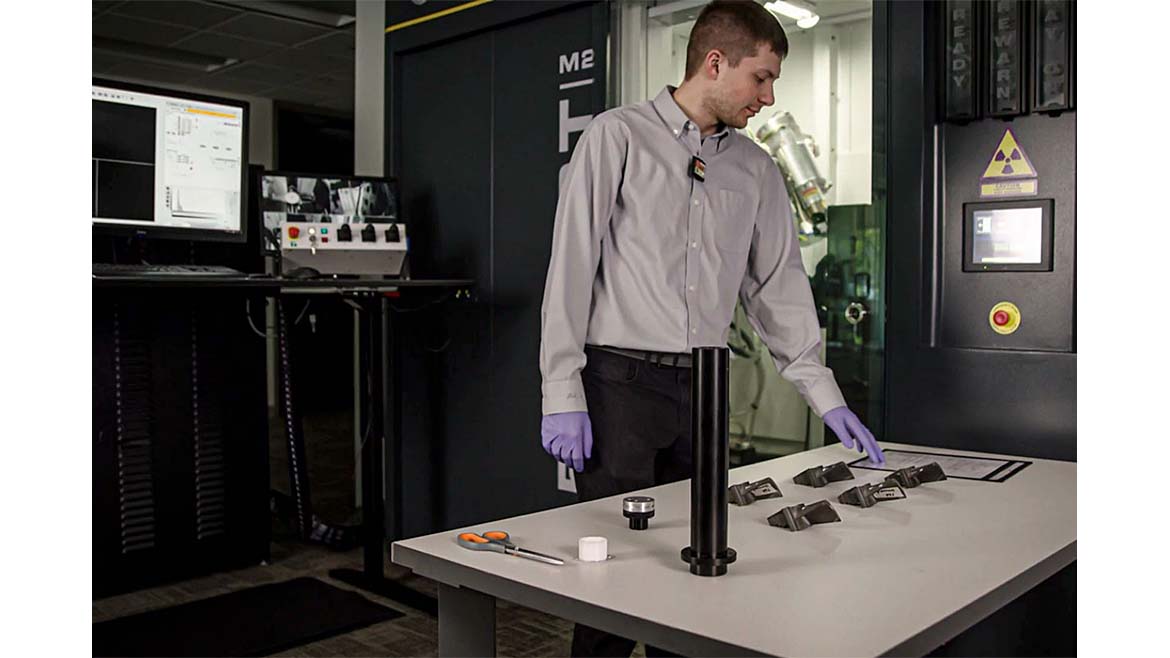
X-ray CT Inspection Services Technician Inspecting a Batch of Turbine Blades. Source: Nikon Metrology
The Critical Response Situation: What’s at Stake
When a serious quality problem hits, the pressure on a manufacturer can be enormous. Production may be halted. A customer may be waiting. In the worst cases, product safety is a concern.
The instinct in these moments is often to ask: “Should we buy an X-ray CT system?” It’s a reasonable question — but the math rarely works in favor of rushing a capital equipment purchase during a crisis. Procuring and installing an industrial CT system can take months. Getting trained staff in place to operate it properly takes additional time. During an active quality emergency, months are simply not an option.
Inspection services, on the other hand, can be implemented in days or even hours. The right provider will already have the equipment, the certified personnel, and the established processes in place to start scanning immediately. That difference in speed is often the deciding factor.
But speed alone isn’t enough. When you’re in the middle of a quality crisis, choosing the wrong inspection services provider can make a bad situation worse. Here’s what actually matters when evaluating a provider for critical response work.
What to Look for in a Critical Response Inspection Partner:
Certified, Qualified Staff
In a high-stakes situation, you need technicians who are formally certified and qualified to develop X-ray CT techniques to meet your requirements. Look for providers with staff certified to recognized industry standards such as ASNT Level III or NAS 410. These certifications aren’t just credentials on a wall — they represent a demonstrated level of knowledge and competence in X-ray and CT that directly affects the reliability and confidence of your inspection results.
Beyond certifications, ask about the physical environment where evaluations take place. In some cases, image evaluation requires controlled conditions — dedicated, low-ambient-light review stations where technicians can accurately assess scan data without visual interference. It’s a detail that separates professional-grade operations from operations that simply have an X-ray system.
Experience With Crisis Situations Specifically
Performing standard scans and evaluations in a controlled, well-planned environment is one thing. Managing a sudden influx of thousands of parts under tight deadlines is something else entirely. Ask your potential provider directly: have they done this before? How quickly can they move from an initial conversation to active scanning?
Critical response situations involve more than just scanning. There’s logistics coordination — receiving, storing, tracking, and managing large quantities of components. A provider without experience handling volume surges will struggle with the operational side of the work even if their technical capabilities are solid. The transition from panic to execution should be something your provider has done before.
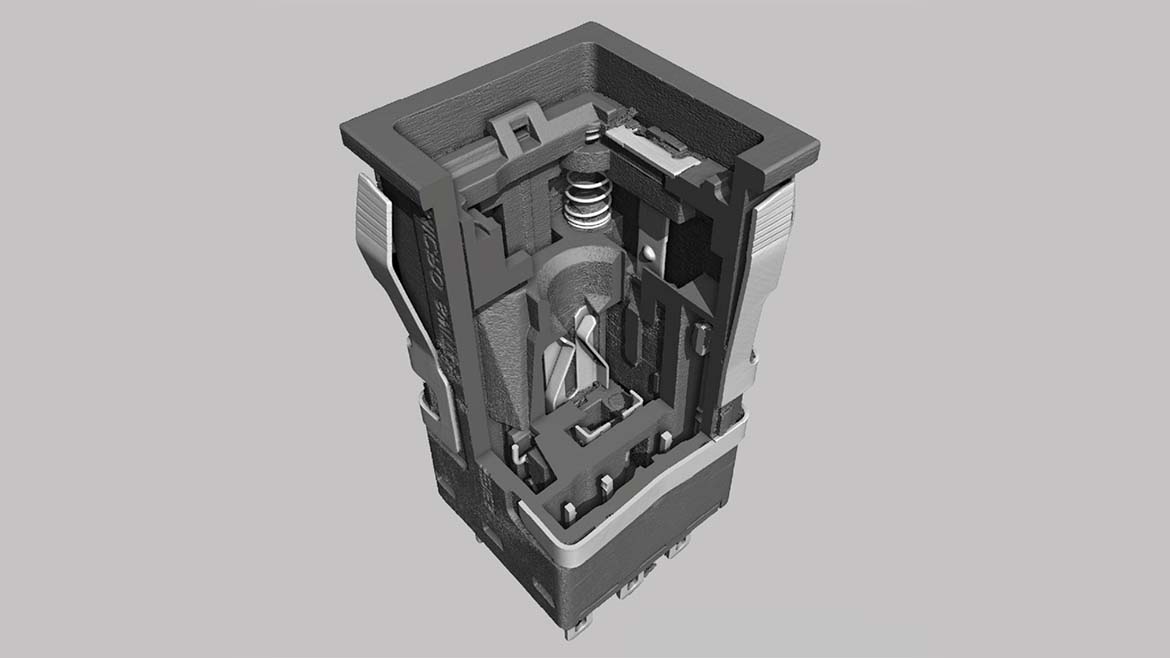
X-ray CT Scan of Connector Assembly Showing 3D Slice Capability for Internal Inspection. Source: Nikon Metrology
Equipment Range and Physical Capacity
Not all parts are created equal, and not all X-ray CT systems can handle every application. A provider with a single system or a narrow range of equipment will be limited in what they can take on. The right provider will have systems capable of handling small precision components, large complex assemblies, low-density materials like composites and plastics, and high-density materials like castings and dense metals.
Physical locations matter too. A provider operating out of a single lab is one scheduling conflict or equipment issue away from blowing your deadline. A provider with multiple locations offers more than just geographic convenience — they offer capacity redundancy. If one facility is at capacity, another can absorb the work. That consistency in delivery time is something you’ll care deeply about when you’re the one waiting on results.
A Certified, Documented Process
During a quality crisis, “we’ll figure it out” isn’t good enough. Your provider should operate under a certified quality management system — ISO 9001 is the standard to look for. A documented, auditable process means your provider isn’t just technically capable, they’re organizationally reliable. A certified process gives your results credibility, especially when you need to explain your inspection methodology to a customer or regulatory body later.
The Ability to Make Pass/Fail Determinations
This is one of the most practical — and often overlooked — capabilities to ask about. Many inspection service providers will give you scan data and images and leave the interpretation entirely to you. That’s useful, but it puts the burden back on your team at exactly the moment when your team is already stretched thin.
The better question is: can your provider make conformance determinations on your behalf? A qualified provider should be able to evaluate your components against your customer-provided inspection criteria or against recognized published standards — such as AWS D20.1 or SAE AMS 2175 — and deliver clear pass/fail results. Not every provider has the certifications and experience required to do this, but the ones that do will save you significant time and decision-making burden during a crisis.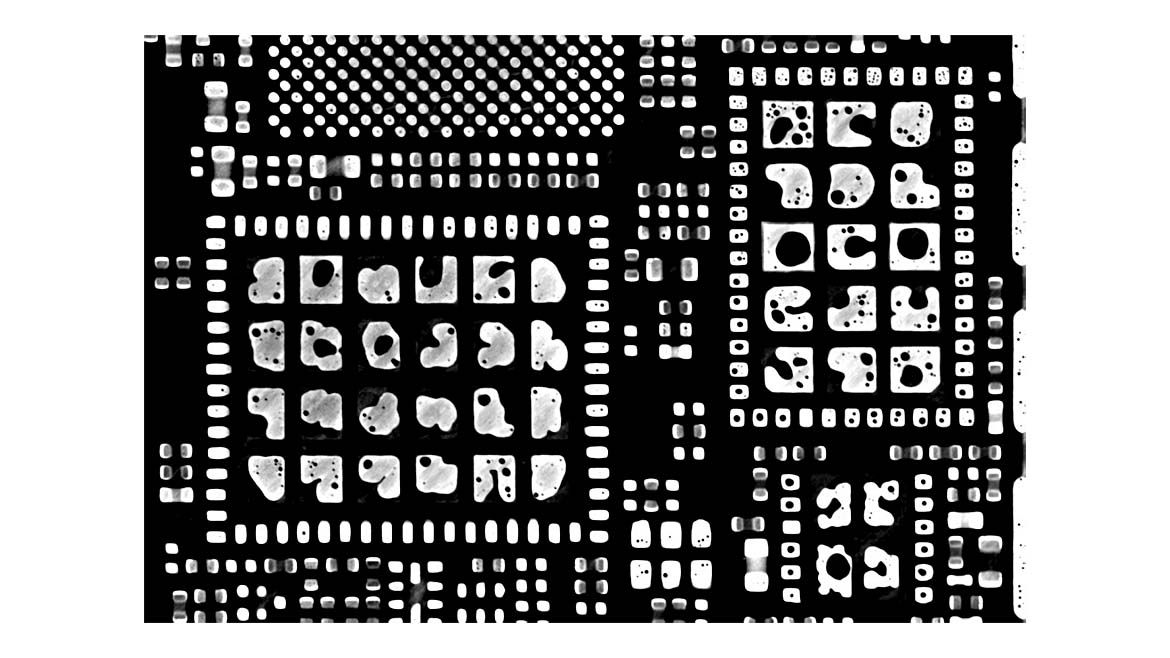
X-ray CT Scan of Circuit Board Showing 2D Planar Slice View. Source: Nikon Metrology
Transparency in Technique
Finally, ask whether your provider will share the scanning technique details with you — the parameters used, the setup, and the methodology. A trustworthy provider operates with full transparency, giving you complete visibility into how your inspection was conducted. This matters for traceability, for future reference, and simply as a sign that your provider has a cooperative mindset. Each provider operates differently, and it’s worth knowing upfront that they will be a collaborative partner for your immediate and future needs.
The Bottom Line
When a quality issue threatens your production, your customer relationships, or your reputation, you need answers — not in weeks, but in days. X-ray CT inspection services, delivered by the right provider, can give you those answers quickly and reliably. The key is knowing what to look for before the emergency hits: certified staff, proven crisis experience, the right equipment range, multiple locations, a certified process, the ability to make pass/fail determinations, and a commitment to transparency. Those aren’t nice-to-haves. In a critical situation, they’re the difference between resolving a problem and compounding one.
Looking for a reprint of this article?
From high-res PDFs to custom plaques, order your copy today!