Manufacturers and brand owners are under tremendous pressure to ensure premium end-to-end product quality, especially as consumers increasingly demand perfection. And a great deal of that product quality pressure still falls on human visual inspection.
Lens and camera manufacturers need to collaborate to develop new mounting standards for the new, large sensor formats already on the market, as well as the ones that will be introduced.
Imaging sensors in the machine vision space have traditionally fit into cameras utilizing only a couple of different camera mounts. However, newer sensors are beginning to grow far too large. Lens and camera manufacturers need to collaborate to develop new mounting standards for the new, large sensor formats.
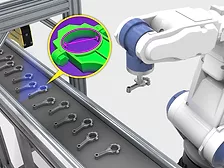
Machine vision solutions help advance quality by recognizing defects at more efficient rates than humans can, making for more consistent and faster production cycles.
While artificial intelligence (AI) is gaining favor as a solution to quality problems, it brings a number of new, sometimes confusing, terms. As a first step, many manufacturers ask “What is AI?”
Imaging using short wave infrared (SWIR) radiation has long offered interesting properties for industrial machine vision but has been slow to be adopted.
If you're still considering taking the first—or possibly next—step in your automation journey, start with the following steps to facilitate the process and feel more comfortable doing it.
If you’re one of those companies still considering taking the first—or possibly next—step in their automation journey, start with the following steps to facilitate the process, and feel more comfortable doing it.
“Garbage in, garbage out” serves as a simple reminder that successful machine vision systems must start with quality data. Current challenges require flexible machine vision systems and models that can keep up with the speed of technology.