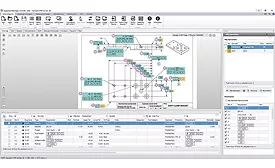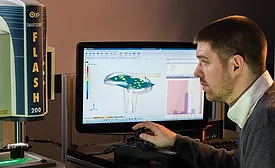
There is a long-standing practice in the computer aided inspection industry that includes CMMs to report in-tolerance values in green and out-of-tolerance values in red.
Those of us on the march towards Quality 4.0 in our manufacturing companies are grappling with the challenge of producing high quality parts with a minimal investment of time and resources into new inspection methodologies.
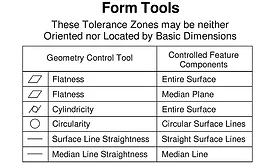
Most quality technicians have been exposed to and probably use geometric dimensioning and tolerance (GD&T) information in their day-to-day work duties.
Medical devices can present unique challenges for manufacturers. Consequences for malfunctioning equipment can be dire. Because of this, medical device manufacturers must work hard to ensure that their products never fail.
Today’s manufactured components are more complex than ever, with more parts diversity, more model year changes and tighter tolerances than ever before.
If you’ve ever suffered through a difficult lesson, you were likely not in Gary Griffith’s class. Griffith teaches geometric dimensioning and tolerancing (GD&T), quality audits, measuring and gaging, and other quality-related subjects, and though the technical aspects could make for a dry learning experience, his students say Griffith makes it fun.
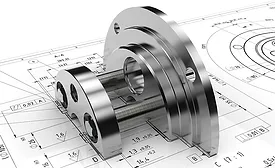
Today’s manufacturing industry relies on the use of GD&T definitions, and the ability to verify parts directly to them for first article and production inspection and reporting. Only then do orders ship and the manufacturer gets paid. Price and scheduling are negotiable, quality is not!
Quality inspection used to be a disparate process isolated in a lab. Today it is much more integrated with the production floor through in-process inspection and open CAD-based measurement software.
You hear a lot about Geometric Dimensioning & Tolerancing (GD&T) today, but less about its practical deployment and utilization in the manufacturing and inspection process.
Referees at sporting events can fuel elation or outrage with their calls when it comes to a favorite team, but in truth, these people are needed to provide an impartial interpretation of the rules of the game.
GD&T is the only tool we have with which to manage machine part geometry perfectly. In particular, it’s the only tool we have with which to impose truly functional limits of imperfection on machine part features and actually guarantee assembly and operation prior to drawing release.