I was chatting with a colleague recently, a well-known supplier of precision measuring instruments. I noted, sarcastically, that his company was promoting a half-day training seminar on calibration and best of all—it was free!
Thickness measurement is the gauging of coatings or films on surfaces—such as paint on metal parts. Manufacturers are increasingly using thinner and higher-performance coatings these days, with tighter applied thickness tolerances and an increasing need for more accurate and precise tools.
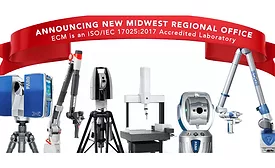
East Coast Metrology LLC. (ECM – Global Measurement Solutions) announced the opening of a new training, service, calibration and retrofit facility in Wixom, MI.
Typical answers include: cheaper, faster, most accurate, none of which would pass a technical smell test. On reflection, many might say they want calibration to tell them if the item to be calibrated is any good or not while not defining what ‘good’ means from a technical point of view.
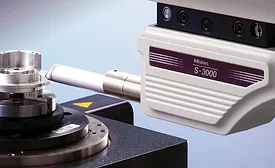
Specifications for surface texture frequently focus on surface “roughness”—the finer structures in the texture—often to the exclusion of the “waviness”—the larger structure of the texture. Unfortunately, problems related to sealing, vibration, noise, wear, etc., are regularly caused by issues hidden in the waviness domain, which cannot be captured by common roughness specifications.
Exact Metrology announces the availability of the Artec LEO 3D scanner, produced by Artec 3D. Artec LEO is the first scanner to offer onboard automatic processing with an integrated touch panel viewer and frees users from being tied to a computer for data capture.
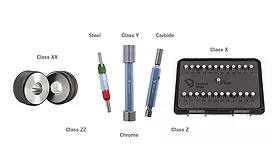
Selecting gages and other types of measuring tools can be challenging. It does not matter if you are an experienced or novice gage user, tool crib manager, lab manager or buyer.