Test & Inspection
Illumination Strategies for Reliable Defect Detection in High-Speed Quality Inspection
Proper placement and alignment of machine vision lights are critical for reliable inspection.

Every second counts on high-speed conveyor lines. A missed barcode or a tiny defect can disrupt production, increase costs, and reduce quality. In modern logistics and industrial automation, speed and precision are critical. High-speed production lines must keep up with growing throughput demands while ensuring accurate inspection, defect detection, and quality control. Machine vision cameras are regularly used to achieve this, but their performance relies heavily on effective illumination. Without the right lighting, even the most advanced cameras can struggle to capture clear, high-contrast images, leading to missed defects, read errors, and operational inefficiencies.
Limitations of Standard Lighting in High-Speed Machine Vision
Standard lighting can struggle to keep up with the speed of modern inspection tasks, as it often lacks the intensity needed to properly illuminate fast-moving items. This can result in darker images or motion blur when exposure times are shortened to match high production rates, reducing detection accuracy and slowing overall production efficiency.
Some of the main issues with standard lighting include:
- Shadows on reflective surfaces
- Motion blur on small, fast-moving items
- Variability across large conveyor widths
Key Lighting Challenges in High-Speed Logistics and Inspection
Conveyor lines in logistics and industrial automation operate at high speeds, requiring lighting solutions that are both fast and efficient. Traditional machine vision lights may fail to deliver bright, consistent illumination at extremely fast shutter speeds and over longer working distances. Uneven or insufficient lighting can compromise image quality, reduce detection reliability, and impact overall operational efficiency. Many high-intensity lights also consume excessive power, making continuous operation costly or impractical. Balancing brightness, uniformity, and energy efficiency while keeping pace with high-speed production is a critical challenge for industrial inspection systems.
Integrating lighting into an existing or complex machine vision setup has long been a challenge for users. Automated systems are made up of many interconnected components, making it hard to fit standard lighting solutions. In some cases, modifications can be costly, so users need a lighting solution that can be seamlessly incorporated into dynamic, evolving setups.
How to Improve Image Quality in High-Speed Logistics Applications
Ultra-bright machine vision lighting delivers high-intensity illumination in a very short pulse (strobe) or continuous output, ensuring cameras capture sufficient light even at high conveyor speeds. By producing strong, uniform brightness across the target area, these lights enable cameras to operate at fast shutter speeds without sacrificing image quality or detail. This rapid, high-intensity illumination helps maintain consistent detection, inspection, and sorting performance, supporting the speed required in the industrial automation sector.
Precision Strobe Lighting for Blur-Free Inspection
Lighting solutions designed for precise synchronization with high-speed camera triggers can deliver short, fast strobe pulses as well as longer on times for applications requiring extended exposures, such as increased working distances or challenging lighting conditions. This approach provides more total light per cycle, producing brighter, more uniform images with improved contrast. For users, this translates to higher barcode read rates, fewer missed frames, and more reliable inspections, helping to maximize throughput and reduce operational costs, all while maintaining energy-efficient performance.
Strobing allows machine vision lights to deliver extremely short, intense bursts of illumination synchronized with the camera’s exposure. This ensures that even at very high conveyor speeds, moving objects are captured sharply without motion blur. By concentrating light into short pulses, strobing also reduces overall heat and power consumption compared to continuous lighting, while maintaining the brightness needed for accurate inspection and detection.
Why Powerful Illumination Boosts Machine Vision Performance
By providing exceptional intensity, ultra-bright lighting enhances the contrast and clarity of fast-moving objects, making subtle defects, labels, or barcodes easier for cameras to detect. By reaching full intensity with the camera’s exposure window, powerful lighting allows vision systems to capture sharp, consistent images at high speeds. This additional visibility reduces errors, minimizes the risk of missed items, and increases productivity in industrial automation applications. Even in challenging conditions, such as reflective surfaces, shadows, or longer working distances, inspection and sorting remain accurate and reliable.
High-Intensity LED Bar Lights for Conveyor Inspection
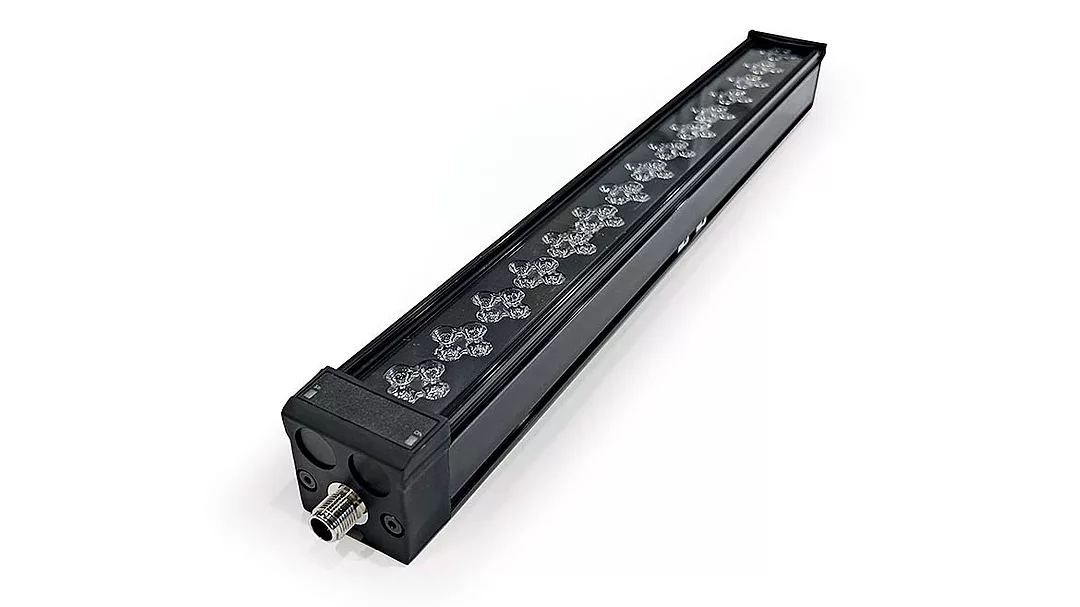
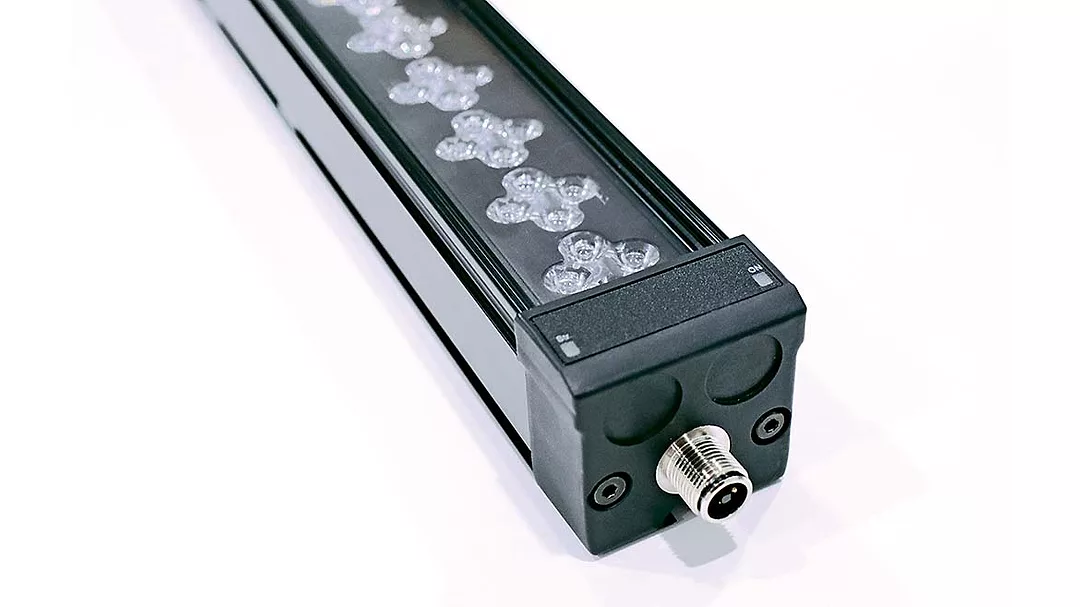
Extremely bright bar lights are a popular choice for high-speed machine vision, providing uniform, high-intensity illumination across wide targets such as conveyor lines. Their ability to deliver both short, powerful strobe pulses and longer continuous illumination ensures cameras capture clear, high-contrast images, even at fast shutter speeds.
Mounting and System Integration
Proper placement and flexible mounting are critical for reliable inspection in high-speed conveyor and industrial automation systems. Lighting solutions should be easy to position, adjust, and secure, even in compact or evolving setups. Thanks to their long form, bar lights offer effective mounting to ensure consistent illumination across the inspection area. They can be positioned at multiple angles, integrated into tight spaces, or combined with diffusers and lenses to optimize light distribution, minimizing shadows and reflections.
Other Lighting Techniques for High-Speed Machine Vision
Different lighting types are used to optimize high-speed inspections depending on the application. Backlights create silhouettes for shape and presence detection, diffuse dome lights provide soft, even illumination to minimize shadows, and polarized lighting reduces glare on reflective surfaces. Selecting the right type ensures consistent image quality and improves the accuracy of defect detection, barcode reading, and assembly verification.
Practical Tips for Light Integration
Proper placement and alignment of machine vision lights are critical for reliable inspection. Positioning bar lights at shallow angles can highlight small surface defects, while diffuse lights may be mounted overhead for uniform coverage across wide conveyor lines. Considering factors such as working distance, camera exposure, and reflection angles ensures that each inspection system captures the clearest, most consistent images possible.
Emerging Trends in Industrial Inspection Lighting
Advanced lighting solutions are evolving alongside high-speed automation. Adaptive lighting, AI-assisted image analysis, and smart illumination systems can adjust brightness, color, or pulse timing in real time to improve defect detection. These innovations allow industrial operations to maintain high throughput without compromising quality, even on reflective, transparent, or complex surfaces.
Conclusion
Reliable defect detection at high speeds depends as much on lighting as on camera technology. Ultra-bright illumination, precision strobing, and high-intensity bar lights provide the brightness, uniformity, and responsiveness required to capture clear, high-contrast images on fast-moving production lines. By enhancing visibility, reducing missed defects, and supporting longer working distances without sacrificing energy efficiency, these advanced lighting strategies help maximize throughput, minimize operational costs, and maintain consistent quality standards. Investing in the right illumination solutions ensures that industrial and logistics operations can keep pace with modern production demands while maintaining accuracy and reliability.
Looking for a reprint of this article?
From high-res PDFs to custom plaques, order your copy today!


VisiConsult.webp?height=200&t=1741605985&width=200 "Casting(C)VisiConsult")