Machine Vision
Machine Vision Lighting Solutions for Unwanted Glare
Unwanted glare in machine vision is a common obstacle, but one that’s solvable with the right knowledge and tools.

The most effective solution for ambient glare is to prevent it from reaching your vision system. Shrouding ensures that ambient light, or changes in ambient light throughout the day, does not impact the image captured at any given time.
You could argue that glare is the very reason that machine vision lighting exists. Whether detecting a faint scratch on a glossy surface or decoding an etched code on metal, unwanted reflections can obscure details and compromise inspection accuracy.
The challenge isn’t just seeing the part. It’s seeing it clearly, consistently, and reliably, regardless of surface reflectivity or surrounding light. That’s the role of machine vision lighting: to remove the visual interference that generic lighting introduces and provide clarity in even the most demanding applications.
Unwanted glare usually stems from one of two sources: ambient light in the surrounding environment, or the lighting system itself. Each requires a different approach to diagnosis and correction.
Not All Brightness Is Glare: Oversaturation vs. Glare vs. Specular Reflection
When reviewing an image, a bright spot does not always mean something is wrong. It could be intentional specular reflection in a bright field setup, necessary to reveal certain features. Or it could be oversaturation, where parts of the image become too bright, washing out detail despite having the right light.
Specular reflection and unwanted glare are closely related. Both occur when light reflects directly off the object into the camera. The difference lies in intent: specular reflection is harnessed purposefully in bright field lighting to create contrast, while glare is the unwanted version of the same phenomenon.
To diagnose whether an unwanted hotspot is glare or simply oversaturation, a good test is to move the light. If it is glare, the bright spot on the sample shifts. If it remains static, it is more likely oversaturation. Recognizing this distinction is key to determining whether there is truly an issue in your vision setup.
Oversaturation can be corrected by adjusting the exposure time, aperture, or light intensity. If the bright spot disappears and the image balances out, it is likely oversaturation. A simple rule of thumb: in your region of interest, the brightest area should sit around 200 on a 0-255 grayscale. Any brighter, and you risk losing critical data.
Diagnosing how to solve for unwanted glare is less straightforward. It starts with identifying what type of glare is interfering with your image.
Understanding the Two Sources of Glare
There are two primary types of glare that engineers encounter:
- Ambient glare is a “contamination” problem. Uncontrolled environmental lighting, such as sunlight through a window or overhead fluorescent lights reflect into the camera.
- Machine vision lighting glare is a design problem. It occurs when the machine vision lighting itself reflects off the sample and into the camera in a way that obscures target features rather than enhancing them.
If you turn the lights off in the testing area and the hotspot disappears, it is an ambient glare problem. Machine vision lighting glare will appear in the image regardless.
Each has its own set of possible solutions, which is why it is important to know which type is causing issues.
Solving for Ambient Glare
When ambient glare interferes with your imaging system, the key is to prevent external light from contaminating your inspection environment.
Shrouding is a physical method of isolating the vision system from environmental light. Enclosures or housings prevent light outside the system from reaching the sample or the camera. This approach is the most effective solution for ambient glare. Shrouding also supports system repeatability, allowing vision algorithms to operate in a stable lighting environment day and night, across seasons.
If a shroud is unfeasible due to space constraints or mechanical movement, the next best solution is to overpower the ambient light by manipulating the vision system’s exposure settings and lighting intensity.
Overpowering glare works by reducing the camera's exposure time so that ambient light is too weak to register, then using a high-intensity or overdriven machine vision light to ensure only the intended illumination is captured. This effectively drowns out ambient interference by making your controlled light the dominant source in the image.
Start by shortening the camera’s exposure time until ambient light alone no longer produces a visible image. Then, increase the machine vision lighting intensity so the target is properly illuminated within that shortened exposure window.
If standard intensity is insufficient, overdriving the light is the next step. Overdriving involves delivering short bursts of high-intensity light without damaging the LED. This requires a controller capable of regulating pulse width and duty cycle to protect the hardware while boosting brightness, or a light specially designed to overdrive at an extremely high brightness.
(Image: “Glare_Overpower” images)
Caption: The image with a faster shutter speed (right) has significantly less glare compared to one captured with a slower shutter (left). A faster shutter speed means light has less time to reach the camera, and that includes the light causing unwanted glare.
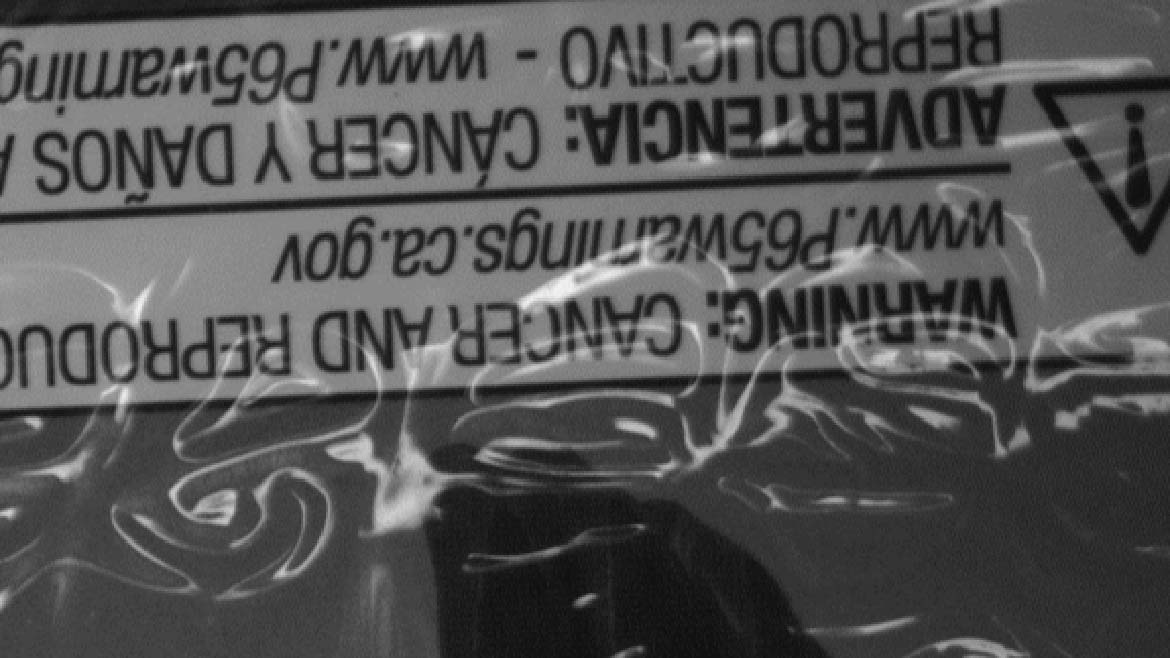
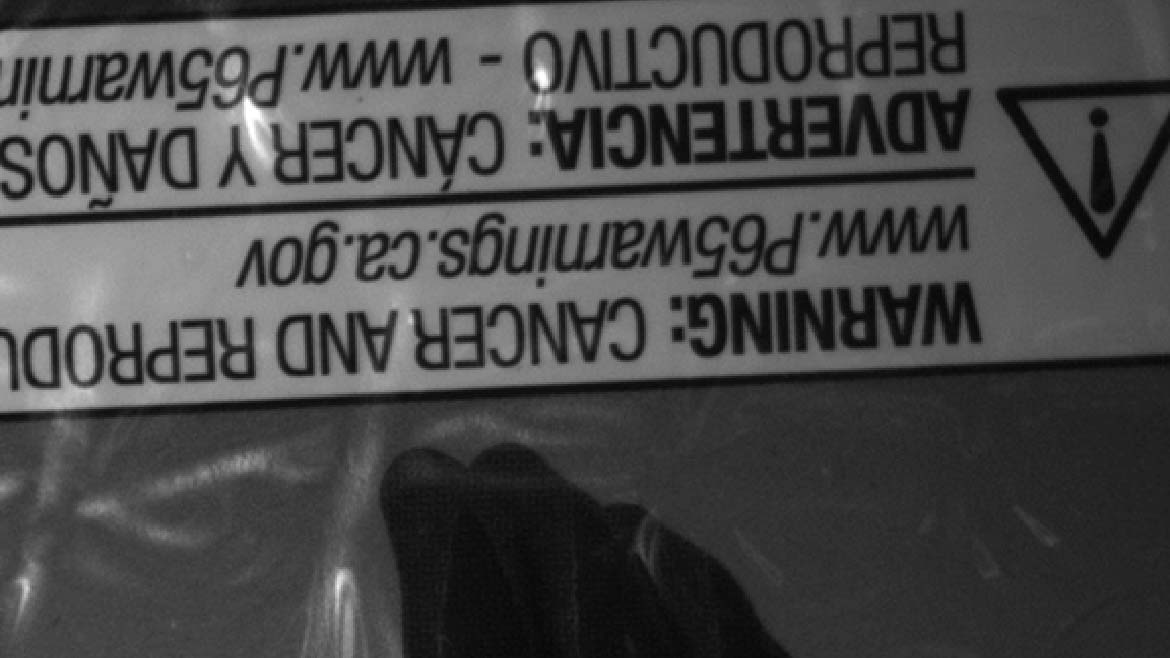
The image with a faster shutter speed (right) has significantly less glare compared to one captured with a slower shutter (left). A faster shutter speed means light has less time to reach the camera, and that includes the light causing unwanted glare.
Image Source: CCS America
Bandpass filters are especially useful when using monochromatic lighting (red, blue, green). When applied to the lens, these filters allow only the wavelength of your machine vision light to pass through while blocking out most of the unwanted ambient spectrum. While not as effective as shrouding or overdriving, bandpass filters can reduce the impact of ambient glare on an image.
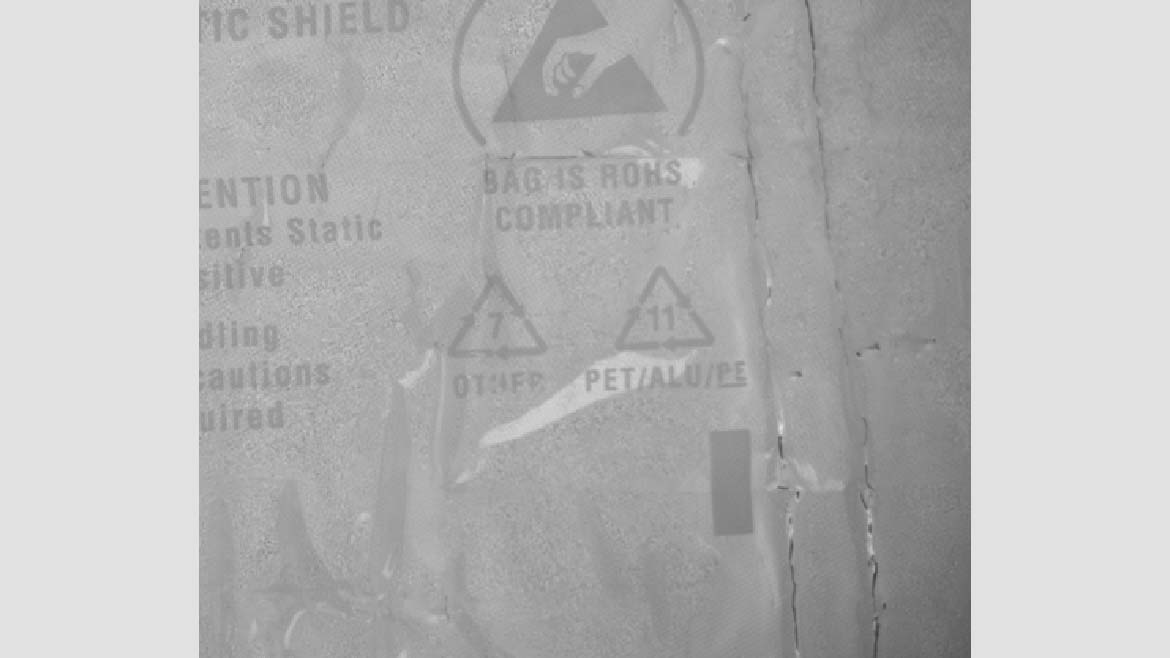
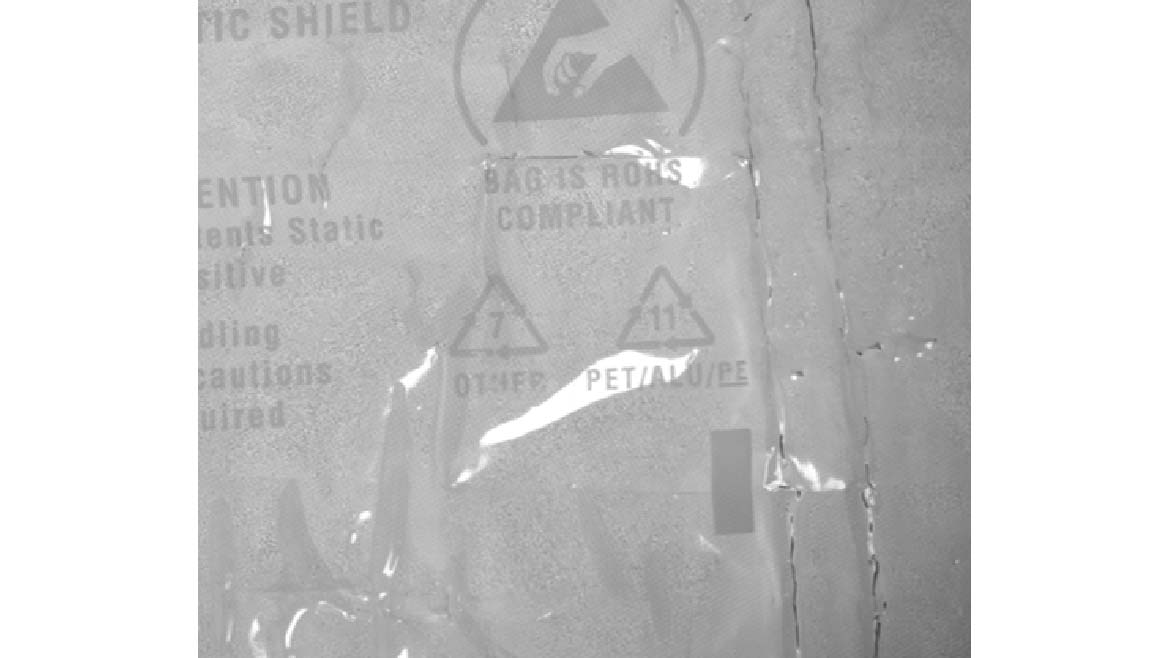
By combining a red monochrome light with a red bandpass filter, non-red wavelengths are blocked from entering the camera sensor. While it does not completely eliminate glare, it can reduce its effects by as much as 80%.
Image Source: CCS America
Solving for Machine Vision Lighting Glare
When the glare is caused by your machine vision lights, the issue lies in how the light is interacting with the target and how that interaction is captured by the camera. Reducing the unwanted glare requires adjusting the lighting configuration, but it is difficult to say one solution is more effective than the other. Because the restrictions of the system, such as limited space or the position of other parts of the system, can determine which adjustments can be made.
One place to start is the geometry of your setup. If light is reflecting from the object directly into the camera, repositioning the light source at a different angle can divert the reflection away from the lens. Even small adjustments, such as changing the angle, can dramatically reduce glare. The goal is to illuminate the part in a way that highlights the features of interest while avoiding direct reflective paths to the camera that interfere with showing those features.
Switching to a more effective lighting form factor can do a lot to improve glare. For example, coaxial lights use a beam splitter to deliver light from directly above the object, making them excellent for flat, specular surfaces like glass, PCBs, or machined parts. Then there are form factors for emitting diffused light. Dome lights are the primary diffused light form factor, and they can be especially effective for curved or shiny surfaces that reflect light unpredictably. By lighting the target from all directions, they minimize the chance of any one reflection hitting the camera.
It is also possible to get more diffuse light not by switching to a different form factor, but by adding a diffuser accessory to the existing light to increase the scattering of its light rays. In situations where there is not enough space to accommodate another form factor or the glare is not a major problem using the existing lighting, a diffuser can be the best option. Keep in mind that while diffusion increases uniformity, it does so at the cost of brightness. Choosing the right diffuser (mild, moderate, or heavy) can balance your application’s intensity and uniformity requirements to remove glare without losing the brightness needed to detect target features.
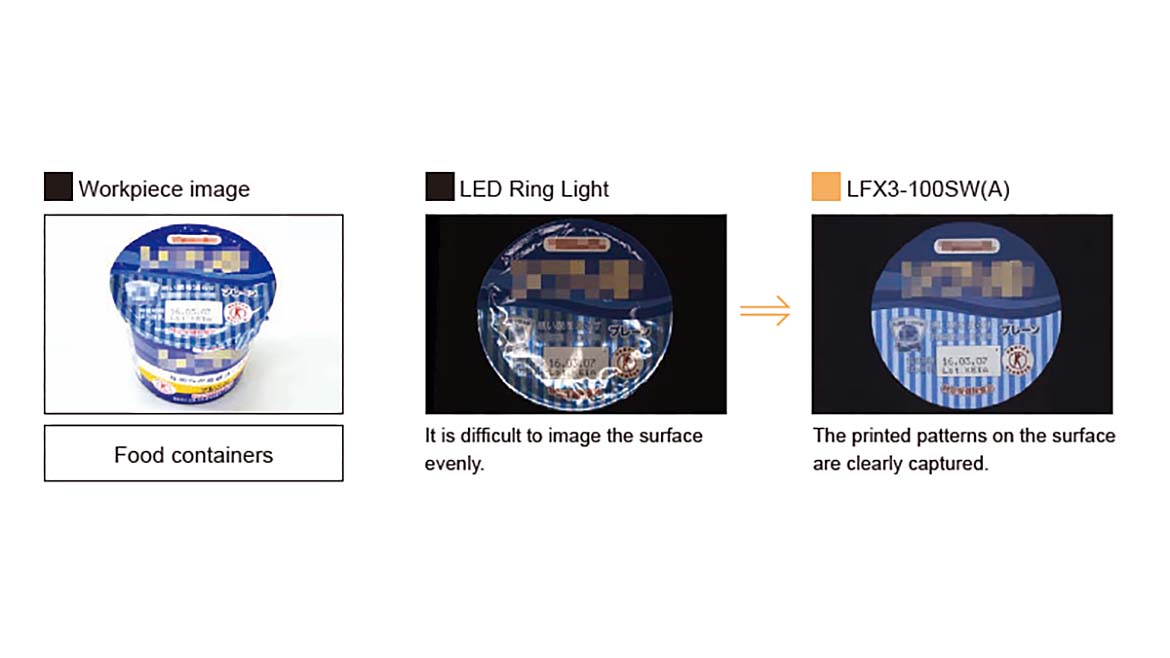
Diffuse lights are frequently used to remove glare when inspecting shiny workpieces. In this example, a flat dome light provides diffuse illumination to remove glare from an image of a reflective film of a food lid.
Image Source: CCS America
Polarization is another effective method to control reflections. When polarizers are placed on both the light and the camera lens at perpendicular orientations, they block specular reflections while allowing diffuse reflections to pass through.
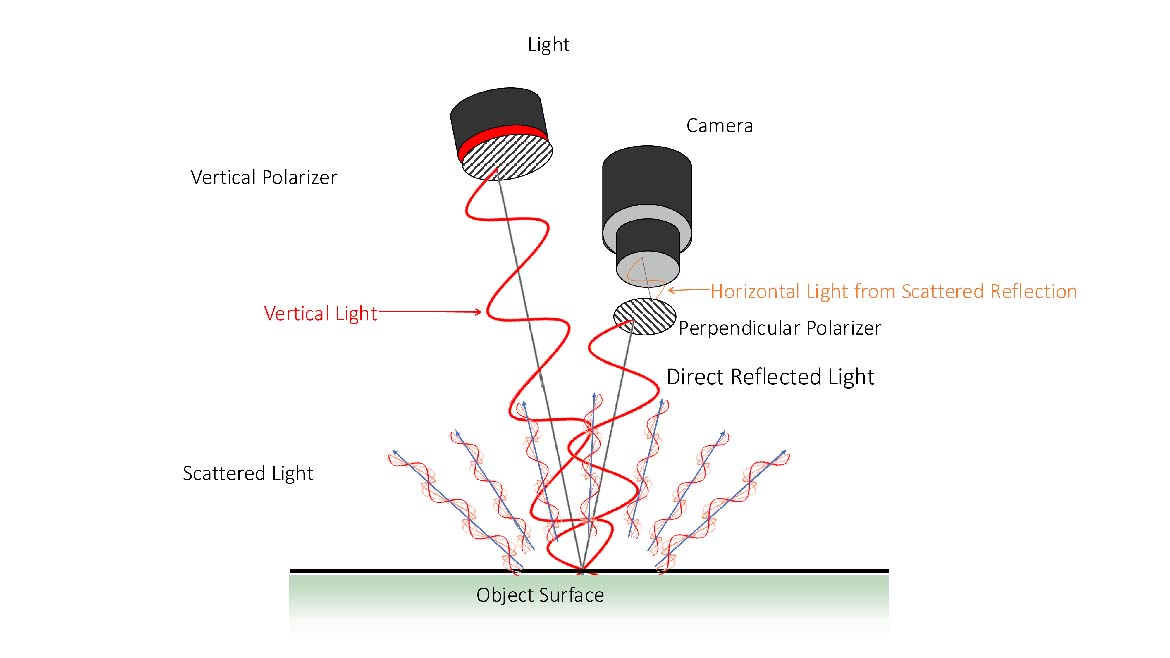
Polarizers aligned perpendicularly block unwanted glare by only allowing diffused light scattered by the sample to reach the sensor.
Image Source: CCS America
Here’s how it works: polarized light reflects specularly off a surface while retaining its polarization. By aligning the camera polarizer perpendicular to that of the light, you can block this reflected light, reducing glare. Meanwhile, diffuse reflections, which lose polarization, are still visible.
This technique is highly effective for glossy or mirrored surfaces but reduces overall light throughput. It’s best used in systems where light intensity is ample or can be increased to compensate.
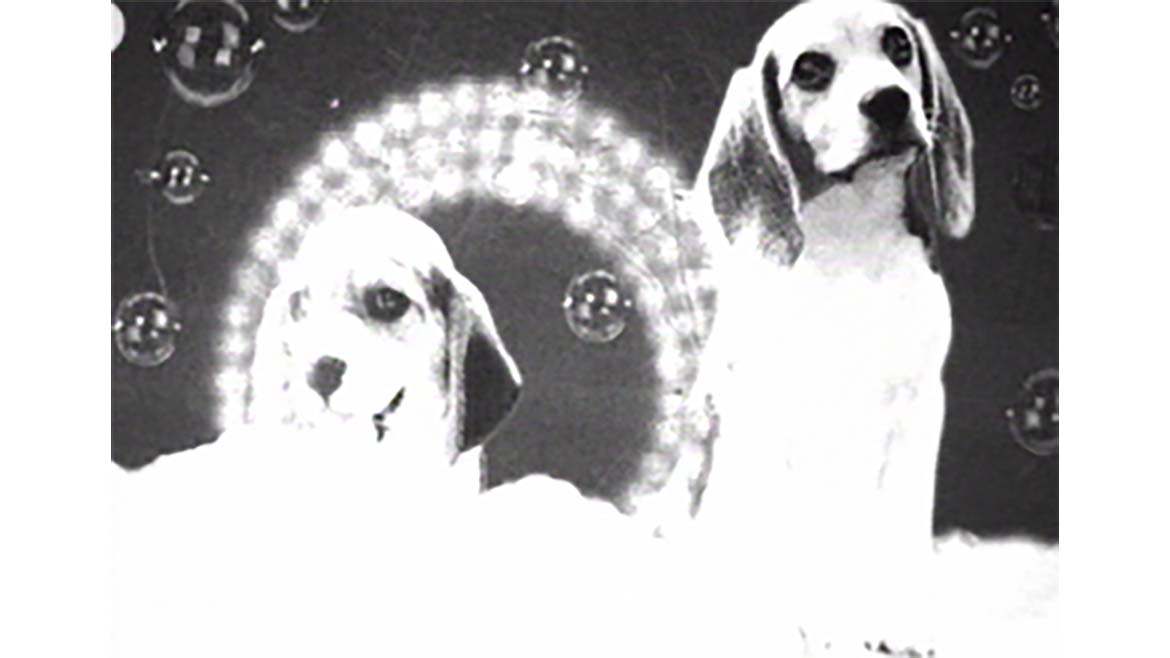
When the polarizer on the light and on the camera are misaligned, you will still see glare in an image (left). By rotating the polarizers until they are perpendicular, the glare will disappear from the image (right).Image Source: CCS America
The Source of Glare Determines Your Solution
Unwanted glare in machine vision is a common obstacle, but one that’s solvable with the right knowledge and tools. Whether the issue stems from environmental lighting or from the vision lighting system itself, engineers have multiple options they can turn to depending on the application. By understanding the type and source of glare, and by applying pragmatic, proven solutions, engineers can design systems that deliver precise, reliable, and high-quality images even in the most reflective or unpredictable environments.
Looking for a reprint of this article?
From high-res PDFs to custom plaques, order your copy today!