As machine vision systems continue to evolve, they are increasingly tasked with supporting higher resolutions, faster frame rates, and multi-camera configurations.
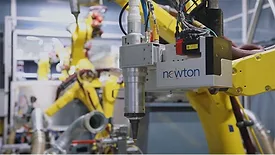
In manufacturing, quality has always been defined by consistency — the ability to produce every part to the same standard, every single time. Inspection remains essential, but the industry’s focus has shifted. Rather than catching defects after they occur, the goal today is to eliminate variation at the source.
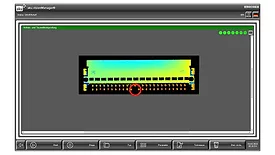
The biggest challenge when testing the pins is to ensure that they function perfectly even after assembly under a wide range of external influences, such as vibrations or moisture.
The connector application from aku.automation and AT Sensors, which inspects over 1.7 million pins every day with unprecedented precision, is setting a new benchmark in the electronics industry.
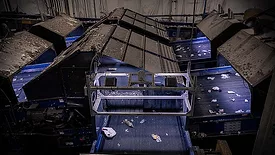
Computer vision algorithms and robotic sortation equipment are capable of seeing better than humans while sorting orders of magnitude more material at far lower costs than existing equipment.
Artificial intelligence (AI) has evolved far beyond a passing buzzword, powering diverse industries with applications ranging from predictive analytics to robotic automation.
Machine vision systems and data analytics now serve as essential components of modern production and quality control environments rather than optional tools.
The objective was to achieve fast, accurate recognition of small characters at a close working distance of roughly nine inches, even in demanding industrial environments.
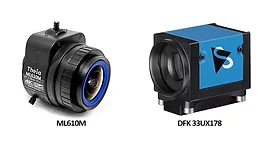
Central to the system’s success was Theia’s ML610M 2/3″ format varifocal lens, designed for a 1.55 µm pixel size to resolve detail up to 300 line pairs per millimeter contrast.
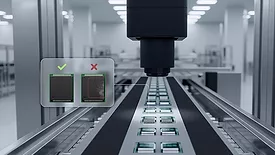
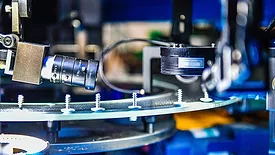
This article emphasizes the need for efficient wafer inspection in semiconductor manufacturing to maximize throughput and minimize defects. It highlights that modern methods must combine speed with sensitive defect detection, with advanced machine vision technology being crucial for identifying macro defects early in the production process to avoid costly issues in finished components.
The trends in machine vision indicate a growing need for systems that can manage increased variability, function autonomously, and operate in sectors that have traditionally depended on manual inspection.
Challenges can arise after implementing a vision system, leading to frustration from inconsistent performance and hidden costs. Early planning and involving integration teams can help organizations fully leverage vision systems for quality improvement.
As technology evolves, efficient compression techniques are vital for multi-sensor applications and 3D implementations. Seamless data fusion can enhance performance in logistics and robotics while meeting user expectations and infrastructure limits. Discover how these strategies are setting new standards in quality and efficiency.
 RSS
RSS