Quality Magazine logo
search
cart
facebook twitter linkedin youtube
  • Sign In
  • Create Account
  • Sign Out
  • My Account
Quality Magazine logo
  • NEWS
  • PRODUCTS
    • FEATURED PRODUCTS
    • SUBMIT YOUR PRODUCT
  • CHANNELS
    • AUTOMATION
    • MANAGEMENT
    • MEASUREMENT
    • NDT
    • QUALITY 101
    • SOFTWARE
    • TEST & INSPECTION
    • VISION & SENSORS
  • MARKETS
    • AEROSPACE
    • AUTOMOTIVE
    • ENERGY
    • GREEN MANUFACTURING
    • MEDICAL
  • MEDIA
    • A WORD ON QUALITY PUZZLE
    • EBOOK
    • PODCASTS
    • VIDEOS
    • WEBINARS
  • EVENTS
    • EVENT CALENDAR
    • IMTS
  • DIRECTORIES
    • BUYERS GUIDE >
      • Supplier Insights
    • NDT SOURCEBOOK
    • VISION & SENSORS
    • TAKE A TOUR
  • INFOCENTERS
    • Digital Quality Management Systems
    • NEXT GENERATION SPC & QUALITY ANALYTICS
  • AWARDS
    • ROOKIE OF THE YEAR
    • PLANT OF THE YEAR
    • PROFESSIONAL OF THE YEAR
  • MORE
    • Expert Columns
    • NEWSLETTERS
    • QUALITY STORE
    • INDUSTRY LINKS
    • SPONSOR INSIGHTS
  • EMAG
    • eMAGAZINE
    • ARCHIVES
    • CONTACT
    • ADVERTISE
  • SIGN UP!
Test & InspectionNDT

Test & Inspection

X-Ray Nondestructive Testing: What to Know and What to Ask

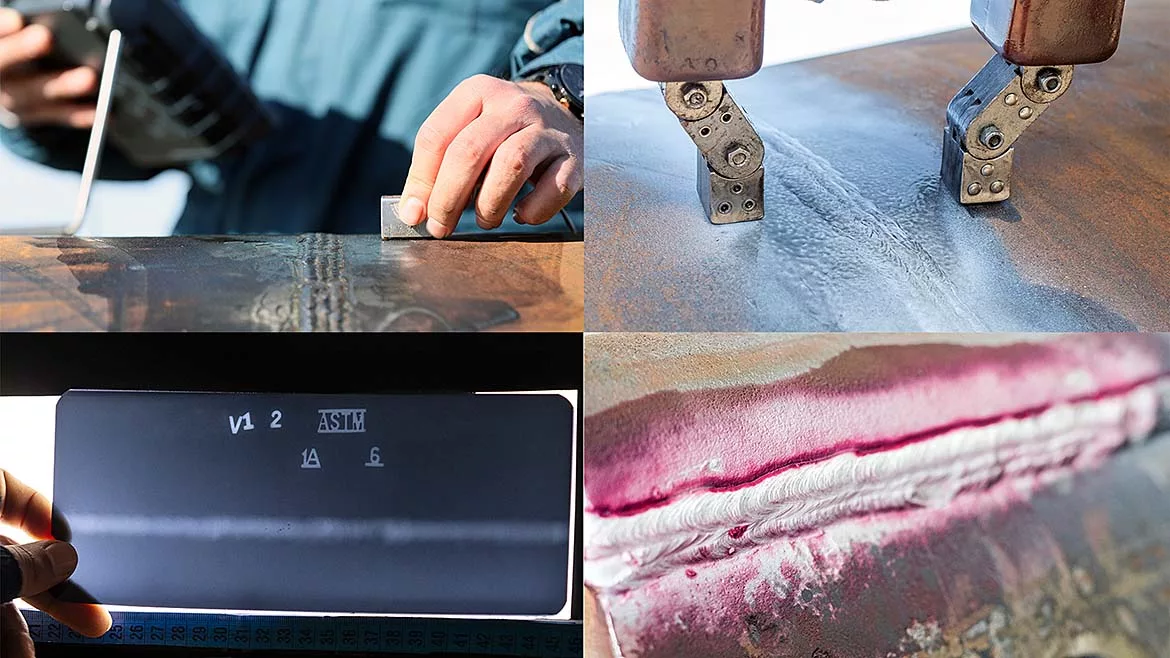
By knowing the material, thickness, composition, and smallest feature of interest, you give your testing partner the information they need to design an efficient and accurate inspection.
By Rick Gerads
various methods of Non-Destructive Testing (NDT)
Credit: Funtay / iStock (Getty Images)
December 23, 2025

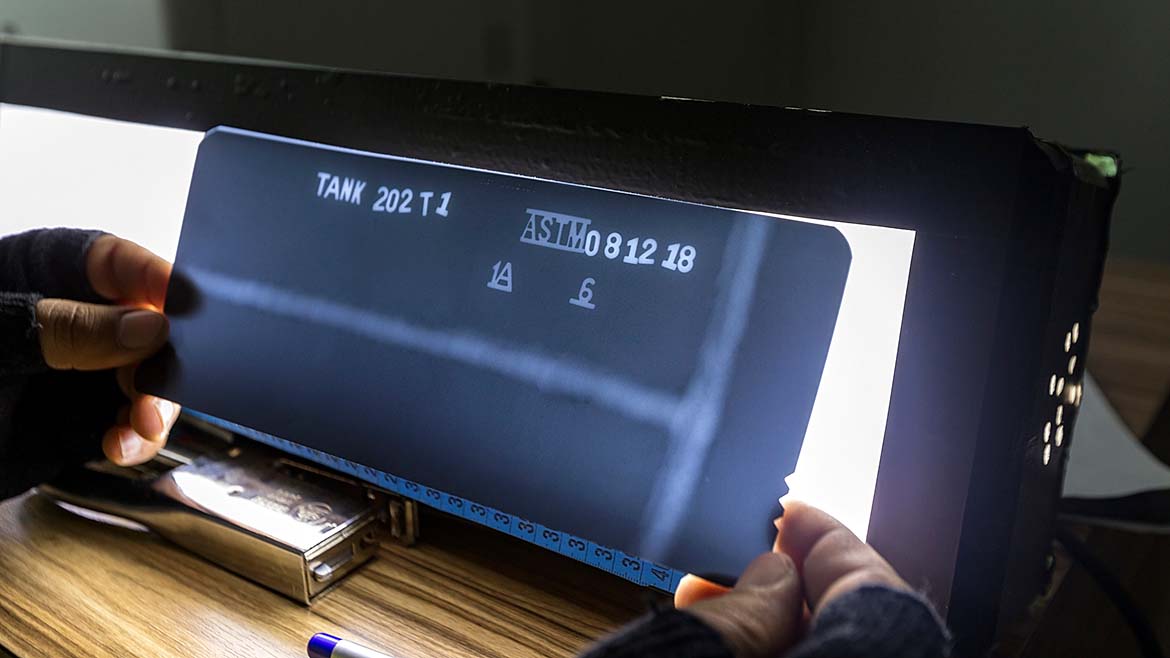
X-ray inspection has long been one of the most trusted methods for inspecting a part without cutting it open. Within the broader field of nondestructive testing (NDT), radiography remains a remarkably flexible tool—able to reveal hidden flaws, confirm weld quality, or verify internal structures that can’t be seen by eye. It’s used everywhere from aerospace and defense to energy, electronics, and manufacturing.

As with any NDT process, success depends on preparation. Before you reach out to a testing provider, it’s worth knowing the details they’ll ask for. Having that information ready makes conversations smoother, quotes more accurate, and results more reliable. Below are a few questions to think through before your first call.
Credit: Funtay / iStock (Getty Images)

1. What Material Is the Part Made Of?

The starting point in any radiographic evaluation is the material itself. The denser the material, the more energy the X-ray source must generate to penetrate it. That energy is measured in kilovolts (kV).

A thin aluminum or titanium casting might image cleanly at 60-80 kV, while a forged steel housing could need several hundred.  Copper alloys, or heavy brass components require even higher settings. Because not every lab operates across the whole energy spectrum—from 160 kV tubes to 9 MeV accelerators—knowing what your part is made of helps determine whether a facility has the correct setup for the job. It also helps them balance exposure, contrast, and detail from the beginning.

(See the reference table below for typical ranges.)

2. How Thick Is the Part?

Once the material is identified, thickness becomes the next factor. The thicker the wall, the more radiation it takes to achieve penetration. That affects both the energy level required and the exposure time.

A slight difference in thickness can have a significant effect on the outcome. Providing accurate part dimensions enables the lab to determine whether a standard X-ray tube will suffice or whether higher-power sources are required. Without that information, a job may need to be reconfigured or repeated later—costing time and money.

3. Is It Made of One Material or Several?

Many modern designs combine different materials—an aluminum housing with a steel insert, or a copper conductor surrounded by insulation, for example. Mixed densities complicate imaging. When the X-ray is strong enough to pass through the denser material, the lighter sections can overexpose, making small details disappear.

If your part includes multiple materials or layers, mention that early. A skilled radiographer can adjust exposure, use filters, or even take multiple images to capture the full range of contrast. That small step often makes the difference between a useful image and one that misses critical information.

4. What’s the Smallest Feature You Need to See?

Every X-ray setup involves tradeoffs between power and resolution. Higher energy allows deeper penetration but can reduce image sharpness. The slightest defect or feature you need to resolve determines which approach makes sense.

  • Conventional systems using film or imaging plates generally resolve down to about 0.010 in (254 µm).
  • Micro-focus systems, which use focal spots as small as 10 µm and high-resolution detectors, can see details as fine as 0.00008 in (2 µm).

If your work involves microelectronics, additive manufacturing, or intricate aerospace parts, that level of magnification might be necessary. Not every lab has it—so be sure to ask.

Industrial Radiography X-Ray kV Range Chart

This table outlines typical voltage ranges needed to image common engineering materials. Actual requirements vary with density, geometry, and setup, but the values below give a practical starting point for discussion.

Material Typical Thickness Range Recommended kV Range Notes / Applications
Aluminum (6061, 7075, etc.) 0.125–0.25 in (3–6 mm) 40–60 kV Thin sheet or welds—low energy gives better contrast.
0.25–0.5 in (6–13 mm) 60–90 kV Common aircraft components.
0.5–1.0 in (13–25 mm) 90–130 kV Thicker castings and structures.
1.0–2.0 in (25–50 mm) 130–160 kV May require longer exposure times.
Steel (Carbon / Low Alloy) 0.125–0.25 in (3–6 mm) 80–120 kV Sheet welds, small components, pipelines.
0.25–0.5 in (6–13 mm) 120–180 kV Common pressure vessel welds.
0.5–1.0 in (13–25 mm) 180–250 kV Standard plate or pipe welds.
1.0–2.0 in (25–50 mm) 250–400 kV Heavy-wall pipe or castings.
Stainless Steel (304, 316) 0.25–0.5 in (6–13 mm) 120–200 kV Slightly higher energy due to density and scatter.
0.5–1.5 in (13–38 mm) 200–300 kV Sanitary or process welds.
Titanium (Grades 2–5) 0.125–0.25 in (3–6 mm) 80–120 kV Aerospace sheet and weldments.
0.25–0.5 in (6–13 mm) 120–160 kV Good image contrast at moderate power.
0.5–1.0 in (13–25 mm) 160–220 kV Thicker forged parts or castings.
Copper / Nickel Alloys 0.125–0.5 in (3–13 mm) 120–200 kV Electrical or mechanical components.
0.5–1.0 in (13–25 mm) 200–300 kV Dense material—requires a stronger source.
Lead / Brass 0.125–0.5 in (3–13 mm) 200–400 kV Shielding, fittings, or heavy castings.

Reference Guidelines

  • Film radiography typically uses 60–320 kV.
  • Digital panels and CR systems may operate from 40–450 kV, depending on calibration.
  • Steel sections thicker than 2 inches (50 mm) often require a linear accelerator in the 1–6 MeV range.
  • In most cases, using the lowest kV that still achieves full penetration produces the best image contrast and sensitivity.

Final Thoughts

Radiography is both an art and a science. The equipment matters, but so does how well the problem is defined before testing begins. By knowing the material, thickness, composition, and smallest feature of interest, you give your testing partner the information they need to design an efficient and accurate inspection.

When both sides come prepared, the process runs more smoothly, images are sharper, and insights are clearer. In the world of nondestructive testing, that’s how you move from simply seeing inside a part to truly understanding its integrity and performance.

READ MORE

  • Computed Tomography: From Laboratory to Shopfloor In-line Applications 
  • Advancements in Industrial X-Ray Computed Tomography 
  • Beyond the Surface: Overcoming Challenges in Nondestructive Testing 
KEYWORDS: manufacturing metrology quality xray

Share This Story

Looking for a reprint of this article?
From high-res PDFs to custom plaques, order your copy today!

Rick Gerads – Technical Director of NDT, Element Materials Technology. For more information, email [email protected] or visit www.element.com. 

(25) Element EMEAA Space & Defence: Overview | LinkedIn

Recommended Content

JOIN TODAY
to unlock your recommendations.

Already have an account? Sign In

  • 2024 Quality Rookie of the Year Justin Wise 1440x750px banner with "Quality Rookie of the Year" logo inset

    Meet the 2024 Quality Rookie of the Year: Justin Wise

    Justin Wise is an exceptional individual who has been...
    Aerospace
    By: Michelle Bangert
  • Man with umbrella and coat stands outside while it rains at night looking at a building.

    Nondestructive Testing: Is there an ethics problem?

    I was a whistleblower who exposed fraudulent activities...
    NDT
    By: Dale Norwood
  • Unraveling Deflategate: Football stadium with closeup of football on field

    Unraveling the Tom Brady Deflategate

    The Deflategate scandal erupted following the 2014 AFC...
    Measurement
    By: Greg Cenker and Henry Zumbrun
Manage My Account
  • eMagazine Subscriptions
  • Newsletters
  • Online Registration
  • Subscription Customer Service
  • Manage My Preferences

More Videos

Sponsored Content

Sponsored Content is a special paid section where industry companies provide high quality, objective, non-commercial content around topics of interest to the Quality audience. All Sponsored Content is supplied by the advertising company and any opinions expressed in this article are those of the author and not necessarily reflect the views of Quality or its parent company, BNP Media. Interested in participating in our Sponsored Content section? Contact your local rep!

close
  • Key Takeaways for Quality Leaders
    Sponsored byComplianceQuest

    Key Takeaways for Quality Leaders from the 2026 Gartner Magic Quadrant™ for QMS

  • This image shows a person seated next to a Bobcat T66 compact track loader.
    Sponsored byPolyWorks by InnovMetric

    Supercharging Digital Gauging at Bobcat North America

  • Dorsey Calibration Lab photo by Tom LaBarbera Picture this Studios
    Sponsored byDorsey Metrology International

    Ensuring Product Quality in a Competitive Manufacturing Landscape

Popular Stories

This image shows a person seated next to a Bobcat T66 compact track loader.

Supercharging Digital Gauging at Bobcat North America

Dorsey Calibration Lab photo by Tom LaBarbera Picture this Studios

Ensuring Product Quality in a Competitive Manufacturing Landscape

a professional in the aviation field performing maintenance, repair, and overhaul (MRO) work

Manufacturing Retention: Strategies for Improving Company Culture, Engagement and Skill Development

2026 Quality Professional of the Year!

Events

June 22, 2026

Automate 2026

Automate is North America's largest robotics and automation event — and the best place to take your ideas from insight to impact.
 
Our show floor features the world’s leading automation solutions, from AI and robotics to motion control, vision systems, and more. Plus, our educational conference is second to none, led by the brightest minds in automation today.
 
Ready to transform the way you work? Take the next step at Automate.
July 14, 2026

Quality Leaders Forum: Better Communication, Better Quality Data

The Quality Leaders Forum is a quarterly, editor-moderated fireside chat series hosted by Quality Magazine, featuring candid conversations with senior manufacturing and operations executives shaping enterprise-level quality.

View All Submit An Event

Products

Lean Manufacturing and Service Fundamentals, Applications, and Case Studies

Lean Manufacturing and Service Fundamentals, Applications, and Case Studies

See More Products
Quality Podcast Channel Custom Content

Related Articles

  • a massive container ship loaded with cargo containers traversing open water.

    What to Know About Tariffs

    See More
  • IQ/OQ documentation

    Materials Testing Systems in Regulated Environments: What You Need to Know

    See More
  • Ultrasonic Thickness Gage

    What You Need to Know When Selecting an Ultrasonic Thickness Gage

    See More

Related Products

See More Products
  • image.jpg

    Management Lessons from Taiichi Ohno: What Every Leader Can Learn from the Man who Invented the Toyota Production System

  • What Lean Means DVD

  • What Is BPM?

See More Products

Related Directories

  • American Institute of Nondestructive Testing

    The American Institute of Nondestructive Testing offers online and hands-on training in RT, UT, ET, MT, PT and VT nondestructive testing methods. Let us customize an NDT training program that fits your company's needs. We offer training online, at your facility or at our 22,000 Sq Ft facility.
  • American Society for Nondestructive Testing (ASNT)

    ASNT is the association for nondestructive testing (NDT) professionals committed to making the world a safer place. NDT professionals detect irregularities, flaws, and defects in materials, components, and structures that could compromise the safety, reliability, or functionality of an object or structure. Established in 1941, ASNT supports members with certifications, professional development, industry insights, advocacy, events, publications, and networking opportunities and is focused on fostering the growth of future generations of NDT professionals through the ASNT Foundation. Serving more than 22 000 members and certificate holders worldwide, ASNT is the largest technical society for NDT professionals. ASNT is based in Columbus, Ohio, with offices in Houston, Texas, and Chennai, India.
×

Stay in the know with Quality’s comprehensive coverage of
the manufacturing and metrology industries.

Newsletters | Website | eMagazine

JOIN TODAY!
  • RESOURCES
    • Advertise
    • Contact Us
    • Directories
    • Manufacturing Division
    • Store
    • Want More
  • SIGN UP TODAY
    • Create Account
    • eMagazine
    • Newsletters
    • Customer Service
    • Manage Preferences
  • SERVICES
    • Marketing Services
    • Market Research
    • Reprints
    • List Rental
    • Survey/Respondent Access
  • STAY CONNECTED
    • LinkedIn
    • Facebook
    • YouTube
    • X (Twitter)
  • PRIVACY
    • PRIVACY POLICY
    • TERMS & CONDITIONS
    • DO NOT SELL MY PERSONAL INFORMATION
    • PRIVACY REQUEST
    • ACCESSIBILITY

Copyright ©2026. All Rights Reserved BNP Media, Inc. and BNP Media II, LLC.

Design, CMS, Hosting & Web Development :: ePublishing